

Benefits of Drinking Ethically Sourced Tea
Table of Contents
- What Ethically Sourced Tea Actually Means
- Health Benefits of Choosing Ethically Sourced Tea
- Fair Trade Tea Certification Standards Explained
- Environmental Impact of Tea Production and Sustainable Practices
- Social and Economic Impact on Farming Communities
- How to Identify Sustainable Tea Brands and Avoid Greenwashing
- Making the Switch: Why Premium Ethically Sourced Tea Matters
- Conclusion
Last Updated: August 23, 2026
What Ethically Sourced Tea Actually Means
Ethically sourced tea refers to tea produced with respect for environmental sustainability, fair labor practices, and transparent supply chain management. It represents a commitment to how the tea reaches your cup, from the farmer's hands to your brewing vessel.
The tea industry has historically exploited small-scale farmers in regions like India, Kenya, and Sri Lanka. Ethically sourced tea flips this model: producers invest in worker welfare, environmental stewardship, and community development rather than extracting maximum yield at minimum cost.
What makes tea "ethical" involves several interconnected dimensions. Fair wages ensure farmers and workers earn enough to support their families. Supply chain transparency means you can trace your tea back to specific estates or cooperatives. Environmental stewardship addresses how tea is grown, pesticide use, biodiversity preservation, and soil health. Social impact looks at whether farming communities benefit from the tea trade or remain trapped in dependency cycles.
Timeless Voices Coffee sources tea from trusted farms worldwide, prioritizing these exact principles. When you choose ethically sourced tea, you're voting for a different model of agriculture and commerce.
Health Benefits of Choosing Ethically Sourced Tea
Drinking ethically sourced tea delivers health benefits beyond the individual cup. When tea is grown without synthetic pesticides and processed with care, the final product contains fewer contaminants and retains more natural compounds.
Conventional tea production relies on pesticide residues that accumulate in the leaf and can linger in your body. Ethically sourced tea, particularly organic varieties, eliminates this exposure. Tea's antioxidants, compounds like catechins and polyphenols, are better preserved when tea is handled carefully from harvest to packaging (peer-reviewed research). Carefully sourced tea retains these beneficial compounds at higher concentrations than mass-market tea that sits in warehouses for months.
Ethically sourced tea often comes from smallholder farms practicing regenerative agriculture, which maintain biodiversity and produce healthier, more resilient plants with richer chemical profiles than monoculture alternatives. The wellness ritual itself matters too: knowing your tea was produced fairly and sustainably enhances the psychological benefit and strengthens documented stress reduction and mindfulness outcomes.
Timeless Voices Coffee's selection of aromatic loose-leaf varieties ensures maximum flavor and freshness, delivering the full spectrum of health compounds in every steep.
Fair Trade Tea Certification Standards Explained
Fair trade certification is the most recognizable third-party verification system for ethically sourced tea. Organizations like Fair Trade USA and Fair Trade International establish standards that producers must meet to earn their label.
Fair trade standards require producers to pay workers a minimum wage that actually supports living costs in their region, provide safe working conditions, prohibit child labor, and allow workers to organize collectively. They must invest a percentage of profits back into community development: schools, healthcare facilities, water systems. These are audited requirements, not suggestions.
For tea specifically, fair trade certification means smallholder farmers receive direct market access rather than selling through middlemen who capture most value. A farmer earning fair trade prices can invest in equipment, training, and soil health improvements, creating economic stability that reduces pressure to exploit labor or cut corners.
Fair trade certification also requires environmental standards: soil conservation, reduced chemical inputs, and water source protection. Many fair trade tea estates transition toward organic farming because healthier soil reduces input costs while improving yields and quality.
Direct trade is an alternative model that bypasses certification entirely. Importers work directly with specific farms, establishing long-term relationships and paying prices negotiated based on actual production costs and quality. Direct trade can deliver higher prices to farmers than fair trade, but requires more consumer trust since there's no third-party auditor.
Environmental Impact of Tea Production and Sustainable Practices
Tea production's environmental footprint is substantial, but sustainable practices can dramatically reduce it. The industry faces challenges from water consumption, pesticide runoff, deforestation, and carbon emissions.
Water is the most visible concern. Conventional tea estates often deplete groundwater faster than it can be replenished. Sustainable tea farms implement drip irrigation, rainwater harvesting, and soil management techniques that reduce water consumption by 30-50% compared to conventional methods (fao.org).
Pesticide use in tea is particularly problematic because tea leaves are consumed as-is. Conventional farms spray repeatedly, and these chemicals accumulate in soil and groundwater. Organic tea farming eliminates synthetic pesticides entirely, relying instead on biodiversity and natural pest management. This creates healthier, more resilient ecosystems.
Monoculture tea estates cause biodiversity loss. Regenerative tea farms maintain shade trees, preserve native plants, and create wildlife corridors, restoring ecosystem function while improving tea quality, shade-grown tea develops more complex flavor profiles than sun-exposed plants.
The carbon footprint extends beyond the farm gate. Ethically sourced tea from companies committed to sustainability often implements carbon-offset programs or sources from regions closer to major consumer markets. Packaging waste also matters: conventional tea bags contain microplastics that don't biodegrade. Sustainable brands use compostable tea bags made from plant-based materials or offer loose-leaf tea, which eliminates this problem while delivering superior flavor.
Social and Economic Impact on Farming Communities
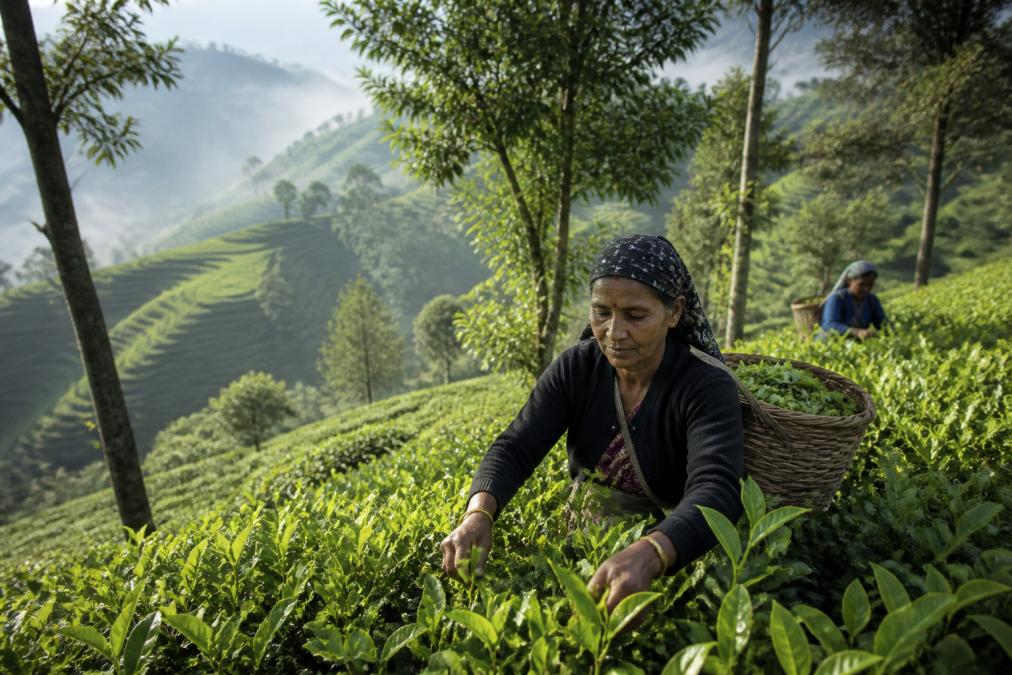
The economics of tea production have historically favored importers and retailers over farmers, who might receive 5-10% of the retail price (ilo.org). Ethically sourced tea redistributes this value chain so farmers retain enough to invest in their communities and livelihoods.
When farmers earn fair wages, they can afford to send children to school instead of putting them to work, access healthcare, improve their homes, and plan for the future. This economic stability reduces the desperation that drives exploitation and environmental degradation.
Community development is a direct requirement of fair trade and ethical sourcing. Tea-producing regions often lack basic infrastructure, reliable water systems, electricity, medical clinics, or quality schools. Fair trade premiums fund these investments. A cooperative in Kenya might use fair trade revenue to build a water tank serving 200 families. An estate in Sri Lanka might fund a health clinic for workers and their families.
Worker empowerment is critical. Fair trade standards require that workers can organize, negotiate collectively, and participate in decisions about how premiums are invested, shifting power dynamics from top-down exploitation to collaborative decision-making.
The economic multiplier effect is significant. When tea farmers earn more, they spend locally, stimulating local economies and creating opportunities beyond tea farming, reducing vulnerability to tea price fluctuations.
How to Identify Sustainable Tea Brands and Avoid Greenwashing
Greenwashing, making false or exaggerated environmental claims, is rampant in the tea industry. Learning to distinguish genuine commitment from marketing language is essential.
Start with certifications. Third-party verification is the strongest signal that claims are real. Look for Fair Trade USA, Fair Trade International, Rainforest Alliance, or Organic certification logos. These require audits and ongoing compliance, making them expensive and difficult to fake. If a brand doesn't display a recognizable certification, ask why.
Check supply chain transparency. Genuine ethical sourcing means you can trace tea back to specific farms or cooperatives. Reputable brands publish this information on their websites. If a brand is vague about origins or uses terms like "various farms worldwide" without specifics, that's a red flag.
Examine packaging claims critically. "Sustainably sourced" without certification is meaningless. "Fair trade" is only legitimate if it displays an official fair trade logo. Brands making bold claims without verification are betting you won't investigate further.
Look at price point. Ethically sourced tea costs more because fair wages, sustainable practices, and certification all add expense. If a brand claims ethical sourcing but prices competitively with mass-market tea, something's wrong.
Research the company's track record. How long have they been sourcing ethically? Do they publish annual sustainability reports? Have they earned third-party recognition? Do they engage transparently with criticism?
Making the Switch: Why Premium Ethically Sourced Tea Matters
Switching to ethically sourced tea is an investment in quality, health, and values alignment. Premium ethically sourced tea costs more because every step reflects genuine commitment: fair wages, sustainable practices, certification audits, and careful handling all compound to create a superior product.
The flavor difference is immediate. Carefully sourced tea tastes noticeably better than mass-market alternatives. The aromatics are more complex, the body is richer, and the finish is cleaner. Once you experience this quality difference, conventional tea tastes thin by comparison.
The health benefits are real. Pesticide-free tea with intact antioxidants delivers measurable wellness outcomes. The ritual of brewing quality tea intentionally creates mindfulness and stress reduction that compounds over time, particularly for daily drinkers.
From a values perspective, choosing ethically sourced tea means your consumption aligns with your principles. You're supporting farmers treated fairly, communities that benefit from tea production, and environmental practices that preserve ecosystems.
Timeless Voices Coffee makes this transition seamless by offering a carefully curated selection of ethically sourced, aromatic loose-leaf tea varieties. Roasting to order ensures maximum freshness and flavor. Over time, premium ethically sourced tea becomes your standard, not a special occasion choice.
Making the shift to ethically sourced tea is one of the most direct ways you can align consumption with values while improving your daily experience. The combination of superior flavor, health benefits, and genuine positive impact on farming communities makes it a choice that pays dividends across multiple dimensions of your life. Timeless Voices Coffee's selection of carefully sourced, fresh-roasted teas delivers exactly this combination: premium quality with verified ethical sourcing, delivered conveniently to your door.
Frequently Asked Questions
Q: What does 'ethically sourced' mean in the tea industry?
A: Ethically sourced tea comes from producers who prioritize fair wages, safe working conditions, and environmental stewardship. It means farmers receive living wages, workers aren't exploited, and production methods protect biodiversity and soil health. Ethically sourced tea often carries third-party certifications that verify these practices, ensuring transparency throughout the supply chain from farm to cup.
Q: What certifications should I look for when buying ethical tea?
A: Look for Fair Trade Certified, Rainforest Alliance, UTZ Certified, or organic certifications on packaging. Fair trade certification standards ensure farmers earn fair wages and work under safe conditions. Organic labels indicate the tea was grown without synthetic pesticides or fertilizers. Some brands also display direct trade verification, showing direct relationships with smallholder farmers. Always check that certifications come from recognized third-party organizations, not just brand claims.
Q: How does ethical tea sourcing impact local farming communities?
A: Ethical sourcing directly improves farmers' livelihoods through fair wages, stable income, and access to education and healthcare. When companies commit to supply chain transparency and long-term relationships, smallholder farmers can invest in their families and land. Community development programs funded through ethical sourcing help build schools, wells, and agricultural training. This creates economic stability that reduces poverty and allows farming communities to thrive rather than merely survive.
Q: Does ethical tea production have a lower environmental footprint?
A: Yes. Ethically sourced tea typically uses sustainable agriculture practices that reduce carbon footprint through regenerative farming, minimize chemical pesticide residues, and protect biodiversity. Responsible sourcing often includes eco-friendly packaging and compostable materials instead of plastic. However, carbon footprint varies based on logistics and transportation distance. Choosing loose leaf over individually wrapped tea bags and locally roasted options further reduces environmental impact and microplastics from tea bag materials.
This article was written using GrandRanker