

Benefits of Small Batch Roasted Coffee
Table of Contents
- What Makes Small Batch Roasted Coffee Different
- Superior Flavor Clarity and Origin Character
- How Long Does Coffee Stay Fresh After Roasting
- Precision Roast Control and Consistency
- Small Batch vs Commercial Coffee Roasting
- Best Practices for Brewing Fresh Coffee
- Environmental and Ethical Advantages
- Conclusion
Last Updated: August 13, 2026
What Makes Small Batch Roasted Coffee Different
Small batch roasted coffee represents a fundamentally different approach than industrial methods. When coffee is roasted in small batches, the roastmaster has direct control over temperature curves, airflow, bean density, and timing, precision that large commercial operations cannot replicate. This allows the roaster to develop the specific flavor profile locked within each batch of green beans, rather than applying a one-size-fits-all approach to thousands of pounds at once.
Small batch roasted coffee retains its aromatic complexity because it's typically roasted to order and shipped within days. At Timeless Voices Coffee, this commitment to freshness means your beans arrive at their peak, preserving the nuanced flavors that most grocery store coffee has already lost to oxidation and staling.
A roastmaster working with smaller quantities can adjust the roast curve mid-process, respond to variations in bean density, and make micro-adjustments impossible in facilities processing tons daily. This hands-on control is why small batch roasted coffee consistently delivers cleaner, more distinct flavor expression than mass-produced counterparts.
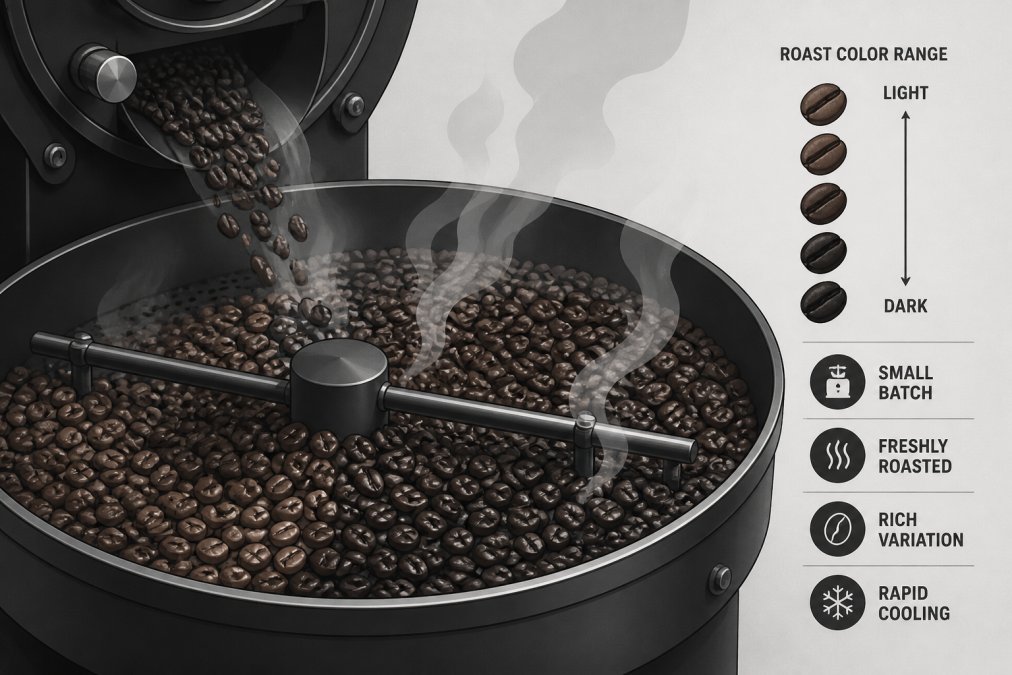
Because roasters work with smaller volumes, they can source premium green coffee from specific farms and microlots that wouldn't be viable for bulk industrial purchasing. This direct relationship with coffee producers means traceability, consistency, and the ability to highlight origin character that gets lost in blended, commodity-grade coffee.
Superior Flavor Clarity and Origin Character
Small batch roasted coffee delivers "flavor clarity", the ability to taste the distinct characteristics of the origin where the beans were grown. When you taste a small batch roast from a specific region, you're tasting the terroir: the soil composition, altitude, and processing method that make Ethiopian coffee taste different from Colombian or Kenyan coffee.
This clarity emerges because small batch roasting allows the roastmaster to develop beans to a point where origin character shines through, rather than being buried under bitter, burnt-tasting byproducts of over-roasting or the underdeveloped flatness of under-roasting. The roast profile is calibrated to highlight what makes that particular coffee unique.
Commercial roasters must apply a standard roast profile to massive batches containing beans of varying density and moisture content. The result is inconsistency: some beans under-develop while others over-roast. This masks origin character and forces roasters to apply darker roasts that add roasted, smoky flavors to cover variation. You're left tasting the roast, not the coffee.
Small batch roasting also preserves the "aroma profile", volatile aromatic compounds that give coffee its distinctive smell and much of its perceived flavor. These compounds degrade over time. Because small batch roasted coffee is roasted fresh and shipped quickly, these aromatics remain intact when the coffee reaches you.
How Long Does Coffee Stay Fresh After Roasting
Coffee begins to stale the moment roasting ends. The degassing process, where CO2 trapped inside the beans escapes, continues for 12 to 24 hours after roasting. Most specialty roasters recommend waiting at least 12 hours, ideally 24 to 48 hours, after roasting before brewing.
Peak freshness typically extends from about 5 to 14 days after the roast date. During this window, the coffee retains its bright, nuanced flavors and full aromatic complexity. The sweetness is pronounced, the acidity is clean, and origin character is most apparent.
After two weeks, coffee begins a noticeable decline. By four weeks, most specialty coffee has lost significant flavor complexity. At six weeks and beyond, the coffee tastes noticeably stale, with dull, woody, or papery notes replacing brightness.
The timeline depends heavily on storage conditions. Coffee stored in an airtight container away from heat, light, and moisture stays fresher longer than coffee left in a bag with a one-way valve. Whole beans stay fresh longer than ground coffee because grinding dramatically increases surface area, accelerating oxidation. Ground coffee typically peaks within 3 to 5 days of roasting.
When you order from a roaster who roasts to order, you receive beans at 3 to 7 days post-roast, right in the sweet spot of peak flavor. Grocery store coffee has often been sitting in bags for months, well past the point where freshness delivers any advantage.
Precision Roast Control and Consistency
The defining advantage of small batch roasting is precision. A roastmaster controlling a small batch can monitor the roast curve and make real-time adjustments based on visual and auditory cues. They watch for the first crack, monitor color development, and listen to determine when to pull the beans.
This level of control allows roasters to hit specific flavor targets consistently. If a roastmaster wants to emphasize bright, fruity notes in an Ethiopian coffee, they develop a roast profile that highlights those characteristics. If they want to bring out chocolate and caramel sweetness in a Colombian bean, they adjust the temperature curve accordingly.
Consistency comes from the roastmaster's skill and the smaller thermal mass of the roaster itself. With fewer beans in the drum, the roaster responds more predictably to heat input. Temperature changes propagate uniformly through the batch. The roastmaster can make micro-adjustments to airflow that keep bean temperature stable and ensure even roasting. In large commercial roasters, these adjustments are impossible.
When you buy small batch roasted coffee from the same roaster, successive bags taste remarkably similar because the roastmaster follows the same roast curve and pulls beans at the same color development point. This consistency makes it possible to dial in your brewing method and trust that each bag will perform similarly.
Small Batch vs Commercial Coffee Roasting
The differences between small batch and commercial roasting reflect fundamentally different business models and priorities.
Small batch roasters typically produce 5 to 50 pounds per roast cycle using dedicated equipment designed for precision. Commercial roasters process hundreds or thousands of pounds daily using industrial equipment optimized for throughput. A small batch roastmaster can spend 12 to 18 minutes on a single roast, making adjustments throughout. A commercial roaster might process a batch in 8 to 10 minutes, applying the same profile regardless of bean variation.
Small batch roasters rely on premium pricing and direct customer relationships. Commercial roasters operate on thin margins and high volume, selling to distributors and retailers who demand consistency and low cost. Commercial roasters often blend beans from multiple origins to achieve consistent flavor at the lowest cost and apply darker roasts to mask quality variation.
Quality control in small batch roasting is manual and immediate. The roastmaster conducts post-roast inspection visually and by taste, rejecting any batch that doesn't meet standards. In commercial operations, quality control is statistical, accepting a certain percentage of defects as normal.
Commercial roasters often apply darker roasts because darker-roasted coffee has longer shelf life, volatile compounds have already been driven off during roasting. Small batch roasters typically apply lighter to medium roasts that preserve origin character, requiring faster consumption to taste their best. This is a deliberate trade-off in favor of flavor.
| Aspect | Small Batch Roasting | Commercial Roasting |
|---|---|---|
| Batch size | 5-50 lbs | 500+ lbs |
| Roast time | 12-18 minutes | 8-10 minutes |
| Roast curve adjustments | Real-time, per batch | Standardized profile |
| Bean sourcing | Single-origin microlots | Commodity blends |
| Quality control | Manual inspection | Statistical sampling |
| Typical roast level | Light to medium | Medium to dark |
| Shelf stability | 2-4 weeks peak | 2-3 months acceptable |
| Price per pound | Premium | Budget-friendly |
Best Practices for Brewing Fresh Coffee
Small batch roasted coffee demands a different brewing approach than stale grocery store coffee. Because the beans are fresher and more volatile, they're more sensitive to water temperature, contact time, and grind size.
For most small batch roasted coffees, use water between 195 and 205 degrees Fahrenheit to extract the optimal balance of sweetness and acidity. Water that's too hot over-extracts and brings out bitter notes. Water that's too cool under-extracts and leaves the coffee tasting sour. If you don't have a thermometer, let water boil and wait 30 seconds before pouring.
Grind size matters more with fresh coffee. A grind that's too coarse under-extracts, leaving the coffee sour. A grind that's too fine over-extracts, making it bitter. Pour-over typically requires a medium-fine grind, French press requires a coarse grind, and espresso requires a very fine grind. If your coffee tastes sour, grind finer. If it tastes bitter, grind coarser.
Contact time, how long water and grounds interact, is the third critical variable. Pour-over brewing typically takes 3 to 4 minutes. French press steeps for 4 minutes. Espresso extracts in 25 to 30 seconds. These timing windows are calibrated to extract the optimal amount of flavor compounds.
Use filtered water, not distilled, which is too soft. Hard water with high mineral content extracts differently than soft water. Chlorinated tap water can impart off-flavors. If your tap water tastes good on its own, it's probably fine for brewing.
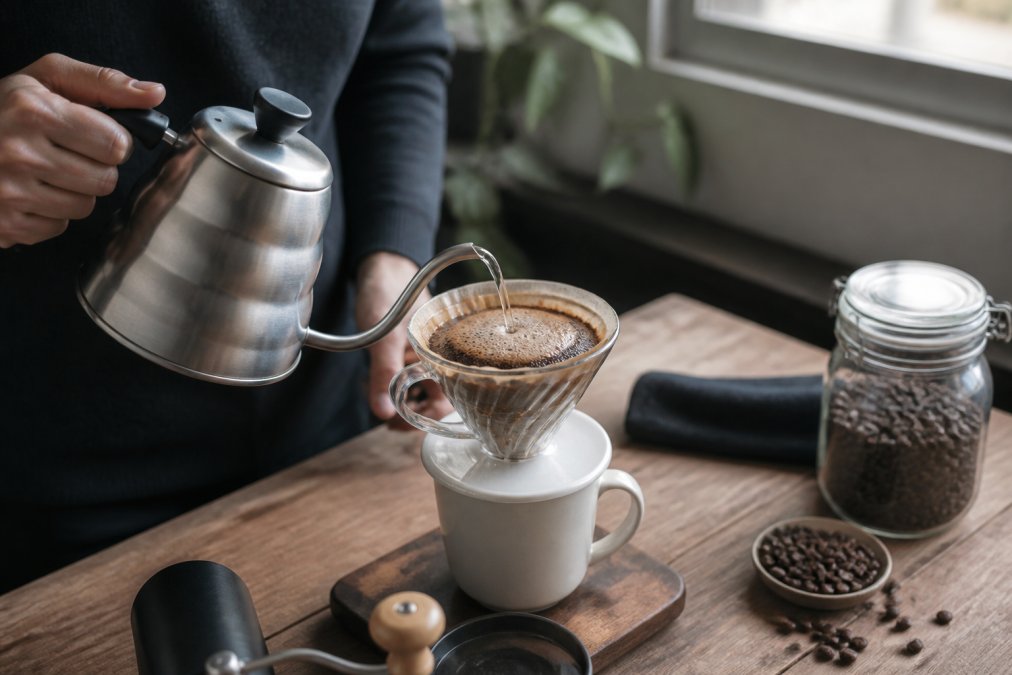
Once you open a bag of small batch roasted coffee, transfer the beans to an airtight container away from heat, light, and moisture. A sealed glass jar in a cool, dark cabinet is ideal. Avoid storing coffee in the refrigerator or freezer, temperature fluctuations and moisture exposure accelerate staling.
Brew small batch roasted coffee within 5 to 14 days of the roast date for peak flavor. If you can't use it that quickly, order smaller quantities more frequently rather than buying in bulk.
Environmental and Ethical Advantages
Small batch roasting produces less waste and supports more equitable relationships with coffee farmers than industrial roasting. Commercial coffee roasting generates substantial chaff and requires energy-intensive cooling systems. Small batch roasters generate less chaff per unit of coffee and use less energy overall because their roasters are smaller and more efficient. Some small batch roasters compost their chaff or use it as biomass fuel.
Small batch roasters typically work directly with coffee farmers or through specialty importers who maintain relationships with specific farms. Farmers receive a fair price for their coffee, often substantially higher than commodity prices, and roasters can guarantee consistent quality and traceability.
Commercial roasters source from commodity markets where price is the primary driver. Farmers producing commodity coffee receive minimal payment, often below production costs. This economic pressure drives environmental degradation: monoculture plantations requiring heavy pesticide use, deforestation, and water pollution. Farmers have no incentive to invest in sustainable practices when barely making ends meet.
When you choose small batch roasted coffee, you support a model that pays farmers fairly, preserves forest ecosystems, and maintains biodiversity. Many small batch roasters can tell you the specific farm or cooperative that produced your coffee, the altitude where it was grown, and the processing method used.
Timeless Voices Coffee sources from trusted farms worldwide and roasts to order, minimizing waste and ensuring that the coffee you receive is fresh and traceable.
Small batch roasted coffee isn't a luxury, it's a recognition that coffee, like wine or chocolate, expresses the specific place where it was grown and the skill of the person who roasted it. The flavor clarity, freshness, and consistency you get from small batch roasting represent a genuine difference in quality that you'll taste in every cup. Start with a single bag of small batch roasted coffee from a roaster who roasts to order. Brew it fresh, taste it at its peak, and compare it to what you've been drinking. The difference will be immediate and undeniable. At Timeless Voices Coffee, we roast small batches to order from carefully sourced beans, delivering maximum flavor and freshness directly to your door, ensuring every cup reflects the care that went into growing and roasting it.
Frequently Asked Questions
Is small batch roasted coffee actually better than mass-produced coffee?
Yes, small batch roasted coffee typically offers superior flavor clarity and origin character compared to mass-produced alternatives. Small-batch roasters use precise temperature modulation and airflow control to develop each bean's unique profile. Mass-production prioritizes volume and shelf stability over flavor nuance, often resulting in flatter, more bitter profiles. The roastmaster's attention to batch consistency and post-roast inspection ensures each batch meets quality standards, whereas commercial roasting may sacrifice precision for efficiency.
How long should you wait to drink freshly roasted coffee?
Most specialty coffee experts recommend waiting 24 to 48 hours after roasting before brewing. This allows carbon dioxide to degas naturally from the beans, which improves extraction and flavor clarity. Coffee can remain fresh for 2 to 4 weeks after roasting when stored in an airtight container away from light and heat. For optimal aroma profile and flavor development, consume within the first three weeks. Small batch roasters typically provide roast dates on packaging so you can track freshness and plan your brewing schedule accordingly.
What are the environmental benefits of small batch coffee production?
Small batch roasting reduces waste and environmental impact in several ways. Roasting to order minimizes overproduction and stale inventory that ends up discarded. Smaller thermal mass in batch roasters requires less energy than industrial equipment, lowering carbon emissions. Many small-batch roasters prioritize direct relationships with farms, supporting sustainable agricultural practices and reducing supply chain complexity. Additionally, small batches allow roasters to source specialty and single-origin beans, which often come from farms with certified sustainability practices, rather than commodity coffee that may involve deforestation or water depletion.
Does small batch roasting affect the caffeine content in coffee?
Roast level has minimal impact on caffeine content. The caffeine in coffee beans remains relatively stable regardless of roast profile or batch size. Light roasts may contain slightly more caffeine than dark roasts because less bean mass is lost during roasting, but the difference is negligible. What changes with roast profile is the flavor intensity and body. Small batch roasters' precision allows them to hit specific roast curves that highlight sweetness and clarity while preserving the bean's natural caffeine, whereas commercial roasting may produce overextracted or underdeveloped profiles that mask the coffee's natural qualities.
This article was written using GrandRanker