

Best Ways to Brew Loose Leaf Tea: A Complete Guide
Table of Contents
- Why Water Quality and Temperature Matter for Brewing Loose Leaf Tea
- Loose Leaf Tea Brewing Temperature Guide: Getting It Right
- Steeping Times for Different Tea Types
- Essential Infusers and Strainers for Brewing Loose Leaf Tea
- How to Brew Tea Without an Infuser
- Step-by-Step Brewing Process for Loose Leaf Tea
- Troubleshooting Bitter or Weak Tea
- Cold Brewing and Flash Chilling Loose Leaf Tea
- Frequently Asked Questions
Last Updated: August 31, 2026
Why Water Quality and Temperature Matter for Brewing Loose Leaf Tea
The difference between mediocre and exceptional tea comes down to water quality and temperature control. Water temperature determines how quickly flavor compounds, tannins, and aromatic oils extract from leaves. Too cold yields weak tea; too hot causes over-extraction and bitterness.
Water quality matters equally. Tap water laden with chlorine, minerals, or sediment interferes with flavor extraction. At Timeless Voices Coffee, we emphasize freshly drawn water because it contains more dissolved oxygen, which enhances steeping and allows leaves to fully release their best qualities. Filtered or spring water eliminates contaminants while preserving mineral balance that supports proper extraction.
Loose Leaf Tea Brewing Temperature Guide: Getting It Right
Matching temperature to tea type is the single most important step in the brewing process.
Black Tea Temperature
Brew black tea at 200-212°F (93-100°C) (peer-reviewed research). Black teas benefit from water at or near boiling point because heavily oxidized leaves can withstand aggressive extraction without becoming unpleasantly bitter. If using an electric kettle with temperature control, set it to 212°F. With a standard kettle, pour immediately after boiling.
A common mistake is letting black tea cool before pouring, thinking this prevents bitterness. In reality, black tea needs that heat to extract properly. Bitterness comes from steeping too long, not from water temperature.
Green Tea and Herbal Infusion Temperature
Brew green tea at 160-180°F (70-80°C) (peer-reviewed research). Herbal infusions vary more widely, but most steep best at 195-212°F (90-100°C).
Green tea is minimally oxidized, making its leaves delicate and susceptible to over-extraction. Water that's too hot scalds the leaves, releasing excessive tannins and creating a harsh, grassy taste. If you lack a temperature-controlled kettle, let boiled water cool for 3-5 minutes before pouring.
Herbal infusions like chamomile, peppermint, and rooibos are strong enough to handle near-boiling water and often benefit from it. The exception is delicate herbal blends with flower petals, which can become muddy if over-extracted.
Steeping Times for Different Tea Types
Steeping time is your second control lever after temperature.
Black Tea Steeping
Black tea typically steeps for 3-5 minutes. Start at 3 minutes for a lighter cup, extending to 4-5 minutes for bolder flavor. After steeping, remove tea leaves immediately to prevent over-extraction and bitterness.
Green Tea and Oolong Steeping
Green tea requires 1.5-3 minutes depending on variety. Delicate greens like sencha steep for 1.5-2 minutes; heartier varieties like gunpowder can handle 2.5-3 minutes. Oolong, which falls between green and black in oxidation, steeps for 3-5 minutes at 195-205°F (90-96°C).
Precision matters more with green tea than black. Using a timer transforms your results.
Oolong is often brewed using the Gongfu method: multiple short infusions of 30-45 seconds rather than a single long steep. Each infusion extracts different flavor compounds, revealing the tea's complexity layer by layer.
Herbal Tea Steeping
Herbal infusions are forgiving, steeping for 5-10 minutes without risk of bitterness. Many benefit from longer steeping because beneficial compounds extract more completely with extended contact time. The exception is blends with delicate flowers or petals, which should steep 5-7 minutes max.
| Tea Type | Water Temperature | Steeping Time | Leaves Removed After? |
|---|---|---|---|
| Black Tea | 200-212°F | 3-5 minutes | Yes, immediately |
| Green Tea | 160-180°F | 1.5-3 minutes | Yes, immediately |
| Oolong | 195-205°F | 3-5 minutes (or 30-45 sec per infusion) | Yes, immediately |
| Herbal | 195-212°F | 5-10 minutes | Yes, when desired strength reached |
Essential Infusers and Strainers for Brewing Loose Leaf Tea
An infuser or strainer bridges loose leaf tea and a drinkable cup. The right tool allows leaves to expand fully while keeping sediment out.
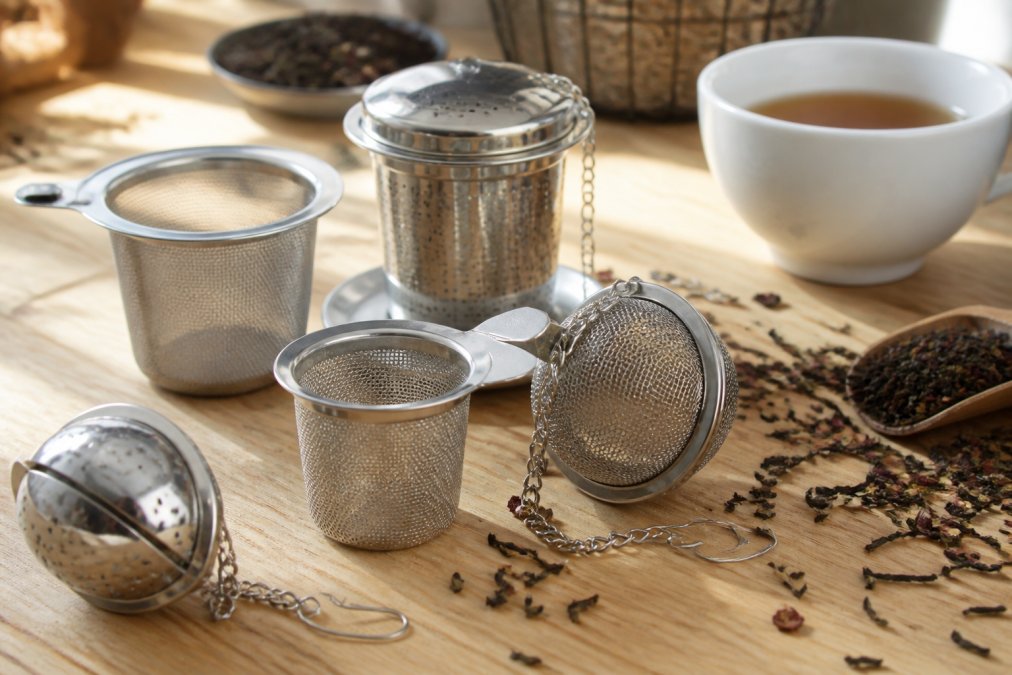
Stainless Steel Infusers
Stainless steel infusers are the workhorse of loose leaf brewing. The Yoassi Extra Fine 18/8 Stainless Steel Tea Infuser features a large basket with extra-fine mesh that catches small particles while allowing leaves room to expand and saturate fully. The wide arms fit most mug sizes, and the included drip tray lid prevents mess. Both the Yoassi and OXO Tea Infuser Basket are examples of products that represent excellent value for daily brewing.
Tea Press and Gaiwan Options
The Bodum Assam Tea Press combines infuser function with carafe convenience. Hot water, loose leaves, and the stainless steel infuser go into the glass carafe together. After steeping, you press down the plunger, stopping brewing by separating leaves from liquid. The glass carafe holds multiple servings and comes with a chrome lid.
For traditional Chinese tea preparation, a gaiwan is a lidded porcelain bowl used in Gongfu-style brewing. You place leaves in the bowl, add hot water, cover with the lid, and brew for short intervals of 30-45 seconds per infusion. It requires practice but offers unmatched control and reveals nuanced flavors of high-quality teas.
Portable Infuser Tumblers
The Pure Zen Glass Tea Infuser Tumbler merges brewing with portability. This double-walled glass tumbler has an internal infuser that can sit at the top or bottom, allowing you to brew hot tea and chill it for iced tea. Watertight lids on both ends prevent leaks, ideal for commuting or traveling. It's a premium option compared to basic infusers, but the convenience can justify the cost for frequent brewers.
How to Brew Tea Without an Infuser
Not every situation calls for dedicated equipment. The simplest method is placing loose tea leaves directly in your cup, adding hot water, steeping, then carefully pouring the brewed tea into a second cup, leaving leaves behind.
A paper coffee filter offers another solution. Place loose tea leaves in the center of a filter, gather the edges, and secure with a rubber band to create a makeshift sachet. Steep this bundle just as you would with a commercial infuser.
For larger quantities, a fine-mesh strainer held over a cup catches leaves as you pour brewed tea from your brewing vessel into your drinking cup.
Step-by-Step Brewing Process for Loose Leaf Tea
Brewing loose leaf tea follows a logical sequence. Master these steps, and you'll produce consistent, high-quality cups every time.
Step 1: Measure Your Tea Leaves
A general guideline is one teaspoon of loose leaf tea per 8 ounces of water (peer-reviewed research). For consistency, aim for roughly 2-3 grams of loose leaf tea per 8-ounce cup. Don't skimp on tea quantity, under-dosing yields weak, thin tea.
Step 2: Heat Fresh Water to the Right Temperature
Fill your kettle with freshly drawn water. Avoid re-boiling water that's been sitting, as repeated heating reduces dissolved oxygen and makes tea taste flat.
A variable-temperature electric kettle removes guesswork. Set your desired temperature in one-degree increments. For black tea, set to 212°F; for green tea, aim for 170°F; for oolong, target 200°F.
Without a temperature-controlled kettle, let boiled water cool slightly. Boiled water cools roughly 10°F per minute.
Step 3: Saturate and Steep
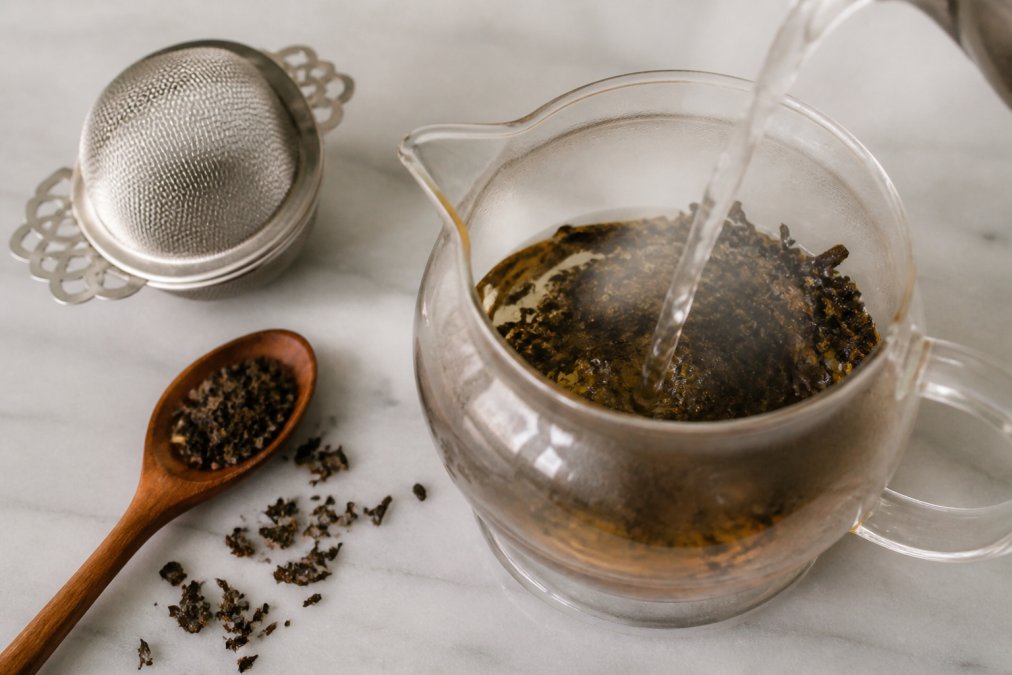
Place your infuser or strainer in your cup, add measured tea leaves, and pour a small amount of hot water, just enough to saturate the leaves. Let this sit for 5-10 seconds. This initial wetting, called "blooming," allows leaves to begin opening and releasing their aroma.
Pour the remaining hot water to fill your cup. Start your timer immediately. During steeping, resist the urge to move the infuser or stir excessively.
Step 4: Decant and Serve
When your timer signals the steeping time has elapsed, remove the infuser or strain the tea into a fresh cup immediately. This stops the brewing process and prevents over-extraction. Serve immediately while the tea is hot.
Troubleshooting Bitter or Weak Tea
Even with proper technique, tea sometimes comes out wrong.
Bitter or Astringent Tea
Bitterness comes from over-extraction. The most common cause is steeping too long. Reduce steeping time by 30-45 seconds on your next cup. Water temperature also contributes to bitterness. If you brewed green tea in boiling water, the leaves were over-extracted even with correct steeping time.
Weak or Underdeveloped Tea
Weak tea results from under-extraction. You either used too little tea, steeped too briefly, or used water that was too cool. Increase steeping time by 30-45 seconds. If that doesn't help, add an extra half-teaspoon of tea leaves to your next cup.
If you're using very old tea that's lost its volatility, weak results are inevitable. Fresh tea from Timeless Voices Coffee, roasted to order, arrives at peak flavor and aroma.
Flat or Dull Flavor
Flat-tasting tea often indicates water quality issues. Heavily chlorinated tap water or water with high mineral content can mask tea's natural character. Switch to filtered or spring water. Flat tea can also result from using water that's been boiled multiple times. Use freshly drawn water each time.
Cold Brewing and Flash Chilling Loose Leaf Tea
Cold brewing and flash chilling represent two distinct approaches to iced tea, each producing different flavor profiles.
Cold Brewing
Cold brewing steeps loose leaf tea in room-temperature or cold water for 6-12 hours or overnight. This slow extraction pulls fewer tannins than hot brewing, resulting in naturally sweet, smooth tea with less astringency. Cold-brewed tea won't become unpleasantly bitter even if forgotten for 24 hours.
Place loose tea leaves in a jar or pitcher, add cold filtered water, cover, and refrigerate. Use a slightly higher leaf-to-water ratio than hot brewing, roughly 1.5 teaspoons per 8 ounces. After the desired steeping time, strain into a fresh container and refrigerate. Cold-brewed tea keeps for up to a week.
Flash Chilling
Flash chilling brews hot tea normally, then rapidly cools it by pouring over ice or into a chilled vessel. The Takeya Flash Chill Iced Tea Maker simplifies this process. You brew hot tea in the pitcher's infuser, then pour the hot tea over ice in the main chamber. The ice rapidly cools the tea while diluting it slightly.
Flash-chilled tea retains more brightness and aromatic complexity than cold-brewed tea because hot water extraction is more efficient. For best results, brew your tea slightly stronger than normal so dilution from melting ice brings it to the right strength.
Brewing loose leaf tea well is a skill that improves with practice and attention. The fundamentals, correct water temperature, precise steeping time, quality water, and proper infuser choice, form a reliable foundation. At Timeless Voices Coffee, we're committed to providing the highest-quality loose leaf tea varieties so that when you master these brewing techniques, you're working with tea that deserves your effort. Visit our site to explore our carefully sourced, fresh-roasted tea selections, and discover how premium loose leaf tea transforms your daily ritual.
Frequently Asked Questions
How much loose leaf tea should I use per cup?
A general guideline is one teaspoon of loose leaf tea per 8 ounces of water, though this varies by tea type. Delicate teas like green tea may need slightly less, while robust black teas can handle a full teaspoon. Start with this ratio and adjust based on your taste preference. Premium loose leaf tea from quality sources often requires less volume because the leaves are more densely packed with flavor compounds and tannins.
Does water temperature really matter for brewing loose leaf tea?
Yes, water temperature significantly impacts extraction and flavor. Black tea requires near-boiling water (200-212°F) to properly extract its bold character, while green tea needs cooler water (160-180°F) to avoid bitterness. Herbal infusions generally tolerate hotter water. Using freshly drawn water heated to the correct temperature ensures optimal flavor development and prevents over-extraction that causes astringency.
Can I brew loose leaf tea without an infuser?
Yes. Pour hot water directly over loose leaf tea in your brewing vessel, then strain through a fine mesh strainer, cheesecloth, or even a clean coffee filter when pouring into your cup. Another method is to let the leaves settle to the bottom and carefully pour the brewed tea into another cup, leaving sediment behind. This method works well for hearty teas and gives you full control over steeping time.
What are common mistakes when brewing loose leaf tea?
The most common mistakes are using water that's too hot (creating bitter, astringent tea), steeping too long (over-extracting tannins), using tap water with high mineral content (affecting flavor), and not measuring leaves properly (resulting in weak or overly strong tea). Additionally, many people don't use fresh, freshly drawn water, which impacts aroma and flavor profile. Starting with quality loose leaf tea and following temperature and steeping guidelines prevents most brewing problems.
This article was written using GrandRanker