

Fresh Roasted Coffee vs Grocery Store: A Real Comparison
Table of Contents
- Fresh Roasted Coffee vs Grocery Store: What's the Real Difference
- Understanding Roast Dates and Peak Freshness
- Coffee Roast Date vs Best By Date: What Actually Matters
- The Science of Coffee Freshness: Oxidation and Degassing
- How to Store Coffee Beans for Freshness
- How Long Does Roasted Coffee Stay Fresh
- Cost Analysis: Fresh Roasted vs Grocery Store
- Flavor Profile and Extraction: Why Freshness Matters
Last Updated: August 24, 2026
Fresh Roasted Coffee vs Grocery Store: What's the Real Difference
The difference between fresh roasted coffee and grocery store coffee is the difference between tasting coffee and tasting time. Fresh roasted coffee arrives days after roasting, when beans still release their full spectrum of flavor compounds. Grocery store coffee typically sits on shelves for weeks or months, with roast dates often obscured or missing entirely. Understanding what separates these experiences requires looking at roast dates, oxidation, and degassing, the chemistry that shapes what ends up in your cup.
Comparison Table: Fresh Roasted vs Grocery Store
| Factor | Fresh Roasted Coffee | Grocery Store Coffee |
|---|---|---|
| Roast Date Visibility | Clearly marked; typically 2-14 days old | Often unknown or months old |
| Peak Freshness Window | 2-4 weeks after roasting | Usually past peak when purchased |
| Flavor Complexity | Full sensory profile with nuanced notes | Flattened, one-dimensional taste |
| Aroma | Vibrant, aromatic, complex | Muted or absent |
| Oxidation Level | Minimal; beans still degassing | Advanced; flavor compounds degraded |
| Price Point | Higher per pound | Lower per pound |
| Sourcing Transparency | Single-origin or named blends | Often generic or blended |
| Storage Condition | Vacuum-sealed or valve-packaged | Exposed to light, heat, oxygen |
Understanding Roast Dates and Peak Freshness
The roast date is the most important piece of information on a coffee bag, and it's almost never on grocery store coffee. It tells you exactly when beans transitioned from green (raw) to roasted, your starting point for understanding freshness.
Fresh roasted coffee reaches peak freshness between 5 and 14 days after roasting (peer-reviewed research). During this window, degassing has progressed enough that CO₂ has been released, but beans haven't yet begun losing volatile aromatic compounds to oxidation. The bloom effect, that initial expansion when hot water contacts grounds, is most pronounced with fresher beans, signaling active CO₂ release and optimal extraction potential.
Grocery store coffee typically sits on shelves for months with no roast date visible. By the time it reaches your kitchen, it's well past its peak. The beans have lost much of their aromatic complexity, and oxidation has begun breaking down the delicate flavor compounds that distinguish a single-origin Ethiopian from a Brazilian blend.
Coffee Roast Date vs Best By Date: What Actually Matters
Most coffee packages display a "best by" date rather than a roast date. These are not the same thing.
A best by date is a manufacturer's estimate of when quality begins to decline, typically set 12-18 months after roasting (the FDA). Coffee doesn't spoil like milk; it stales. Flavor compounds oxidize, aromatic volatiles escape, and complexity flattens into something generic.
The roast date is the actual starting point for freshness. A coffee marked "best by" December 2026 might have been roasted in June, meaning it was already four months old when purchased in September, leaving just three months of the peak freshness window that occurred in the first two weeks after roasting.
Fresh roasted coffee prioritizes the roast date because it's the only number that matters for flavor. Timeless Voices Coffee ships beans within days of roasting, so you receive coffee during its actual peak freshness window, not months after it's passed.
The Science of Coffee Freshness: Oxidation and Degassing
Understanding why fresh roasted coffee tastes better requires understanding two simultaneous chemical processes: degassing and oxidation. These work in opposition, and the balance between them determines the flavor you experience.
How Oxidation Affects Flavor
Oxidation begins the moment roasting stops. Oxygen reacts with compounds in the roasted beans, breaking them down into simpler, less flavorful molecules. Over time, oxidation flattens the sensory profile, bright acidity fades, aromatic complexity diminishes, and what remains is dull and one-dimensional.
Fresh roasted beans are in the early stages of oxidation. Volatile aromatic compounds, esters and aldehydes that give coffee its complexity, are still present in high concentrations. As weeks pass, these compounds oxidize and escape. A single-origin coffee loses its origin character as it ages. The citrus brightness of a Kenyan, the chocolate undertones of a Brazilian, these are among the first compounds to oxidize.
Grocery store coffee has been oxidizing for months. The damage is already done. You're tasting what remains after oxidation has eliminated much of the complexity.
The Degassing Process Explained
Degassing is the simultaneous process by which carbon dioxide (CO₂) trapped in beans during roasting escapes into the air. Immediately after roasting, beans are saturated with CO₂. If you brew beans that are still heavily degassing, the CO₂ interferes with water extraction, producing under-extracted, sour coffee. This is why many roasters recommend waiting 12-24 hours before brewing freshly roasted beans.
Over 5-14 days, degassing reaches an optimal point (peer-reviewed research). Beans have released enough CO₂ for proper brewing, but haven't yet lost the volatile compounds that create complexity. After this window closes, oxidation becomes the dominant process and flavor is lost faster than it improves.
Fresh roasted coffee arrives during this optimal degassing window. Grocery store coffee completed its degassing phase weeks ago and has moved fully into the oxidation phase where flavor is being lost.
How to Store Coffee Beans for Freshness
Storage is your only tool for slowing oxidation once you have the beans. The goal is to minimize oxygen exposure, light exposure, heat, and humidity.
Storage Methods That Extend Shelf Life
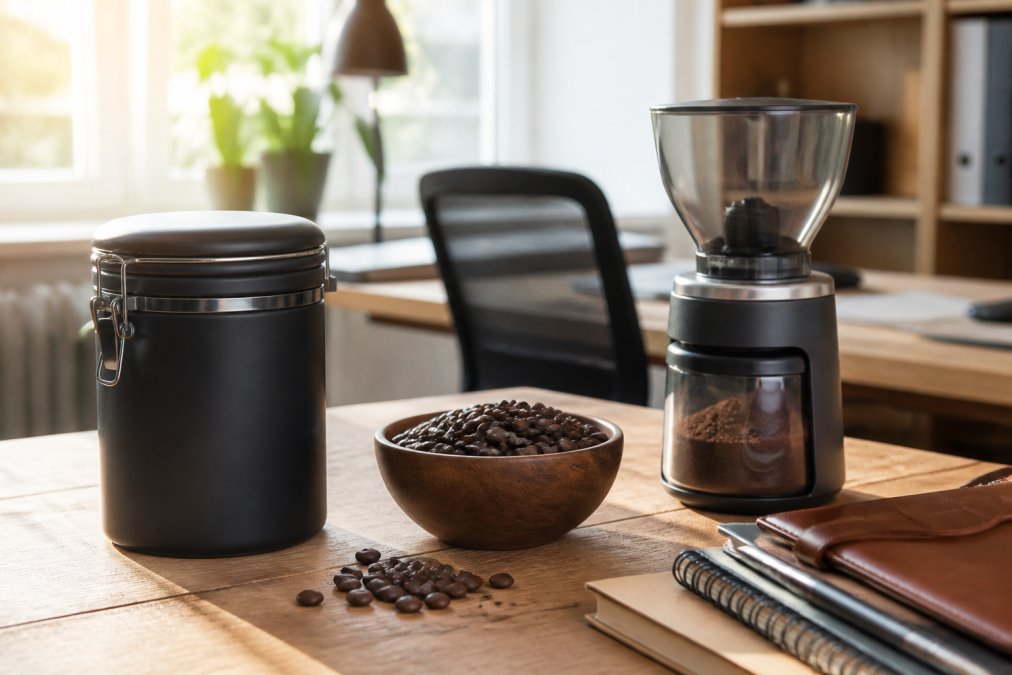
For most home coffee drinkers, an airtight container is sufficient. The Airscape Kilo uses a patented plunger lid that physically removes air from the container, forcing oxygen out through a one-way valve. This is more effective than a standard airtight seal.
Vacuum-sealed bags with one-way valves are a standard for fresh roasted coffee because they allow CO₂ to escape during degassing while preventing oxygen from entering. Choose opaque containers with airtight seals to block light, which accelerates oxidation.
Room temperature storage in an airtight container is ideal. Avoid storing coffee near heat sources or in direct sunlight. Refrigeration is controversial, cold slows oxidation, but moisture and temperature fluctuations can damage beans. For fresh roasted coffee from a subscription service, freezing is unnecessary.
Brewing Method Sensitivity to Bean Age
Not all brewing methods are equally sensitive to bean age.
Espresso is the most sensitive. Espresso relies on high pressure to force water through finely ground coffee in a short time. Stale beans produce poor crema, weak body, and sour or flat flavors. Fresh roasted coffee is almost essential for good espresso.
Pour-over and drip brewing are moderately sensitive. These methods provide some buffer against stale beans through control over extraction time and water temperature. You can compensate by adjusting grind size and brew time.
French press is the most forgiving. The long steep time and full immersion extraction method means even older beans produce a drinkable cup. The body and mouthfeel mask some flavor loss.
If you use an espresso machine or pour-over setup, fresh roasted coffee becomes a priority. If you primarily use a French press, grocery store coffee is more tolerable, though fresh roasted will still taste noticeably better.
How Long Does Roasted Coffee Stay Fresh
The freshness timeline for roasted coffee is predictable and measurable.
Days 1-3 after roasting: Still heavily degassing. Brewing works, but CO₂ interference can produce sour, under-extracted coffee.
Days 5-14 after roasting: Peak freshness. Degassing has progressed enough for optimal extraction, but oxidation hasn't yet significantly degraded flavor compounds.
Weeks 3-4 after roasting: Still good, but noticeably flatter than peak. Oxidation is beginning to reduce complexity.
Weeks 5-8 after roasting: Acceptable but diminished. Oxidation has reduced aromatic complexity significantly.
Weeks 9+: Stale. Oxidation has progressed far enough that coffee tastes generic and flat. This is where most grocery store coffee sits when purchased.
Properly stored coffee can extend these timelines slightly, but storage cannot reverse oxidation. A six-month-old bean stored perfectly still tastes significantly worse than a two-week-old bean stored casually.
Cost Analysis: Fresh Roasted vs Grocery Store
Grocery store coffee costs less per pound because it's mass-produced, often blended from lower-grade beans, and stored for extended periods. The lower cost reflects lower quality at every stage.
Fresh roasted coffee costs more per pound because single-origin or specialty blends command higher prices, roasting to order means smaller batch sizes and higher labor costs, and subscription models include packaging and shipping.
The per-cup cost difference is smaller than the per-pound difference suggests. Fresh roasted coffee requires less coffee to achieve the same extraction because fresher beans release their solubles more efficiently.
For someone drinking two cups per day, the annual cost difference between grocery store coffee and a fresh roasted subscription is meaningful but not prohibitive. Pricing depends on quantity, dates, and delivery. Timeless Voices Coffee offers flexible subscription options that let you adjust frequency and quantity based on consumption. For current prices, please visit the Timeless Voices Coffee website.
The real question is whether the flavor improvement justifies the cost difference. For someone who values the sensory experience of coffee, reading, working from home, morning rituals, the answer is usually yes.
Flavor Profile and Extraction: Why Freshness Matters
Freshness directly determines the sensory profile you experience: the acidity, body, complexity, and aroma that distinguish one coffee from another.
A fresh roasted single-origin coffee has a distinctive flavor profile shaped by its terroir (altitude, environmental factors, processing method) and roast profile. This creates a specific sensory experience: perhaps bright citrus acidity, chocolate undertones, and floral aroma. This profile is most pronounced during the peak freshness window.
As coffee ages and oxidizes, this profile flattens. Bright acidity becomes dull. Chocolate undertones fade. Floral aroma disappears. What remains is generic coffee that could come from almost any bean. The origin character is lost.
Extraction efficiency also depends on freshness. Fresh beans release their solubles more readily because they're still actively degassing and haven't yet been oxidized. This means you achieve optimal extraction with less coffee or shorter brew times. Stale beans require adjustment to compensate for reduced solubility.
The Bloom Effect in Fresh Brews
The bloom is the initial expansion and bubbling when hot water first contacts fresh coffee grounds. This happens because CO₂ trapped in beans is released by heat and pressure.
For fresh roasted coffee, the bloom is vigorous and visible. Grounds expand noticeably, and bubbles form. This visual cue tells you degassing is still active and extraction is about to begin properly. The bloom phase lasts 30-45 seconds in most brewing methods.
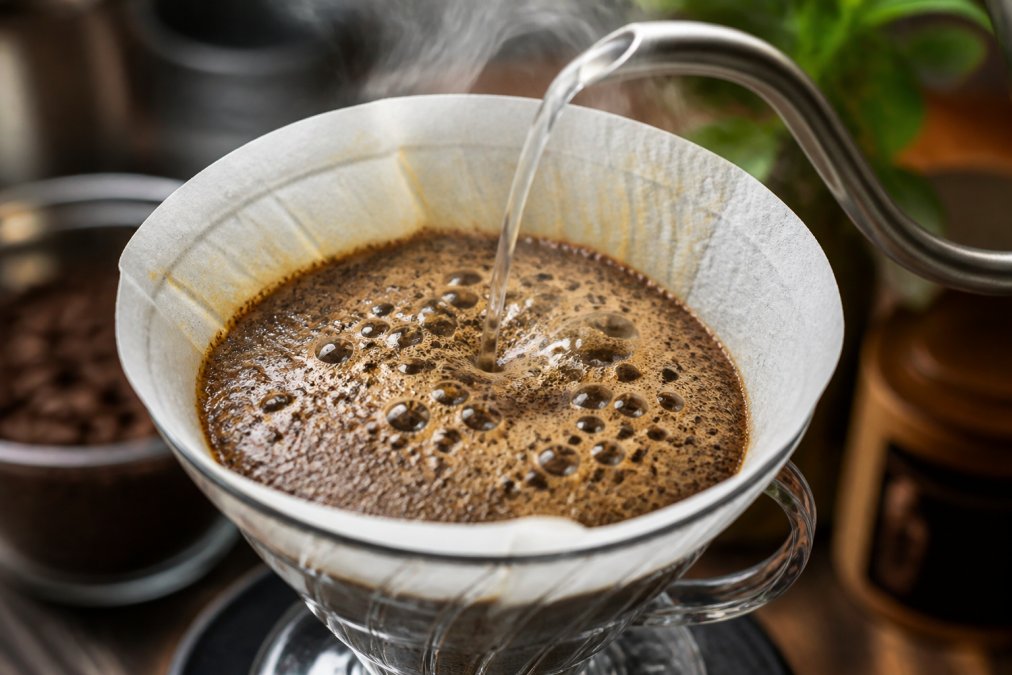
For stale grocery store coffee, the bloom is minimal or absent. There's less CO₂ to release because it's already escaped during weeks of storage. Water doesn't interact with grounds as efficiently, resulting in under-extraction and weaker flavor.
Professional baristas watch for a vigorous bloom as a sign of fresh coffee. A weak or absent bloom signals the beans have been sitting too long.
Complexity and Sensory Profile Over Time
Complexity in coffee refers to the presence of multiple distinct flavor notes you can identify separately. A complex coffee might have citrus, chocolate, and floral notes. A flat coffee tastes like generic coffee with no distinguishing characteristics.
Complexity depends entirely on freshness. Flavor compounds that create complexity, esters, aldehydes, and other volatile organic compounds, are among the first to oxidize as coffee ages. Within weeks, most have degraded, leaving a simplified sensory profile dominated by stable compounds like bitter tannins and roasted grain flavors.
Fresh roasted coffee has maximum complexity. A well-roasted single-origin bean will have 5-10 distinct flavor notes that evolve as the coffee cools. This complexity is why coffee enthusiasts prefer fresh roasted coffee, it's a richer sensory experience.
Grocery store coffee loses complexity rapidly because it's exposed to light, heat, and oxygen on the shelf. By the time you buy it, much complexity has already been lost.
For Timeless Voices Coffee customers, the focus on fresh roasted beans and careful sourcing ensures complexity is preserved through roasting and shipping. Beans arrive during the peak freshness window when sensory complexity is at its highest.
The choice between fresh roasted coffee and grocery store coffee comes down to what you value in your daily ritual. If coffee is fuel, grocery store coffee works fine. If coffee is an experience, something you savor during morning reading, work-from-home breaks, or afternoon rituals, fresh roasted coffee delivers something fundamentally different. Timeless Voices Coffee delivers freshly roasted beans from trusted farms worldwide, arriving at your door during peak freshness with the flavor complexity and aroma that make every cup worth the time you spend on it. Explore our selection of blends, single-origin options, and sample packs to find your ideal roast profile.
=== FAQ ANSWERS (audit these too, same rules) ===
[1] Q: Is fresh roasted coffee actually better than store-bought? A: Yes, fresh roasted coffee delivers noticeably better flavor and aroma. Grocery store coffee typically sits on shelves for weeks or months, causing oxidation that breaks down flavor compounds. Fresh roasted coffee retains peak freshness for 2-4 weeks after roasting, meaning you experience the full complexity and sensory profile the roaster intended. The bloom effect during brewing is more pronounced with fresh beans, resulting in better extraction and a richer cup. While grocery store coffee works, roast-to-order options provide a measurably superior experience if you prioritize flavor.
[2] Q: How can you tell if grocery store coffee is stale? A: Stale coffee shows several visual and sensory signs. Fresh whole beans appear oily and vibrant in color; stale beans look dull, matte, or faded. When you open a bag of stale coffee, the aroma is weak or absent, while fresh beans release a strong, aromatic scent immediately. Taste is the final indicator: stale coffee brews with a flat, bitter, or cardboard-like flavor rather than the intended complexity. If the roast date is missing or more than 3-4 months old, assume the beans have lost significant flavor. Pre-ground coffee stales even faster, sometimes within weeks of roasting.
[3] Q: What is the 15-15-15 rule for coffee? A: The 15-15-15 rule is a guideline for coffee freshness timing. One common interpretation suggests that roasted coffee is best used within 15 days of roasting, ground coffee should be brewed within 15 minutes of grinding, and brewed coffee should be consumed within 15 minutes of preparation. This rule emphasizes freshness as a key factor in preserving coffee's flavor, aroma, and overall quality. However, this varies by storage method and brewing technique. Whole beans in proper airtight storage last longer than pre-ground coffee. Brewing method sensitivity matters too: French press brewing is more forgiving of slightly older beans, while pour-over or espresso reveals staleness faster. The rule emphasizes why roast dates matter more than best-by dates.
[4] Q: How long does roasted coffee stay fresh if stored properly? A: Properly stored roasted coffee stays fresh for 2-4 weeks at peak flavor, with acceptable quality extending to 4-6 weeks. Whole beans last longer than pre-ground coffee because grinding increases surface area, accelerating oxidation. Storage method is critical: airtight, opaque containers that block light and minimize oxygen exposure preserve freshness best. Vacuum-sealed bags with one-way valve packaging work well for initial storage. Temperature stability matters; avoid warm kitchens or direct sunlight. Freezer storage can extend shelf life to 3-4 months if beans are sealed in airtight containers, though this is debated among enthusiasts. Grind only what you'll use within a few days for maximum freshness.
[5] Q: What makes roast-to-order coffee different from mass-produced grocery store options? A: Roast-to-order coffee is roasted within days of shipment, ensuring peak freshness arrives at your door. Mass-produced grocery store coffee is typically roasted weeks or months before purchase, then sits on shelves losing flavor through oxidation. Roast-to-order operations often use single-origin or artisan blends with intentional roasting profiles. Grocery store brands prioritize shelf stability and consistency over peak flavor, using darker roasts or blends that mask age-related flavor loss. The supply chain difference is significant: roast-to-order eliminates long storage periods, warehouse time, and retail shelf time. You also get traceability and sourcing information, whereas grocery store origins are often unclear.
Frequently Asked Questions
Is fresh roasted coffee actually better than store-bought?
Yes, fresh roasted coffee delivers noticeably better flavor and aroma. Grocery store coffee typically sits on shelves for weeks or months, causing oxidation that breaks down flavor compounds. Fresh roasted coffee retains peak freshness for 2-4 weeks after roasting, meaning you experience the full complexity and sensory profile the roaster intended. The bloom effect during brewing is more pronounced with fresh beans, resulting in better extraction and a richer cup. While grocery store coffee works, roast-to-order options provide a measurably superior experience if you prioritize flavor.
How can you tell if grocery store coffee is stale?
Stale coffee shows several visual and sensory signs. Fresh whole beans appear oily and vibrant in color; stale beans look dull, matte, or faded. When you open a bag of stale coffee, the aroma is weak or absent, while fresh beans release a strong, aromatic scent immediately. Taste is the final indicator: stale coffee brews with a flat, bitter, or cardboard-like flavor rather than the intended complexity. If the roast date is missing or more than 3-4 months old, assume the beans have lost significant flavor. Pre-ground coffee stales even faster, sometimes within weeks of roasting.
What is the 15-15-15 rule for coffee?
The 15-15-15 rule is a guideline for coffee freshness timing. One common interpretation suggests that roasted coffee is best used within 15 days of roasting, ground coffee should be brewed within 15 minutes of grinding, and brewed coffee should be consumed within 15 minutes of preparation. This rule emphasizes freshness as a key factor in preserving coffee's flavor, aroma, and overall quality. However, this varies by storage method and brewing technique. Whole beans in proper airtight storage last longer than pre-ground coffee. Brewing method sensitivity matters too: French press brewing is more forgiving of slightly older beans, while pour-over or espresso reveals staleness faster. The rule emphasizes why roast dates matter more than best-by dates.
How long does roasted coffee stay fresh if stored properly?
Properly stored roasted coffee stays fresh for 2-4 weeks at peak flavor, with acceptable quality extending to 4-6 weeks. Whole beans last longer than pre-ground coffee because grinding increases surface area, accelerating oxidation. Storage method is critical: airtight, opaque containers that block light and minimize oxygen exposure preserve freshness best. Vacuum-sealed bags with one-way valve packaging work well for initial storage. Temperature stability matters; avoid warm kitchens or direct sunlight. Freezer storage can extend shelf life to 3-4 months if beans are sealed in airtight containers, though this is debated among enthusiasts. Grind only what you'll use within a few days for maximum freshness.
What makes roast-to-order coffee different from mass-produced grocery store options?
Roast-to-order coffee is roasted within days of shipment, ensuring peak freshness arrives at your door. Mass-produced grocery store coffee is typically roasted weeks or months before purchase, then sits on shelves losing flavor through oxidation. Roast-to-order operations often use single-origin or artisan blends with intentional roasting profiles. Grocery store brands prioritize shelf stability and consistency over peak flavor, using darker roasts or blends that mask age-related flavor loss. The supply chain difference is significant: roast-to-order eliminates long storage periods, warehouse time, and retail shelf time. You also get traceability and sourcing information, whereas grocery store origins are often unclear.
This article was written using GrandRanker