

Why Grocery Store Coffee Tastes Stale
Table of Contents
- Why Grocery Store Coffee Tastes Stale
- The Role of Oxidation in Coffee Staling
- Coffee Roast Date vs. Best By Date: What Actually Matters
- How to Tell if Coffee Beans Are Fresh
- How to Store Coffee Beans for Maximum Freshness
- Fresh-Roasted vs. Mass-Produced: The Flavor Difference
- Why Grocery Store Storage Conditions Accelerate Staleness
- Conclusion
Last Updated: August 12, 2026
Why Grocery Store Coffee Tastes Stale
The coffee sitting on grocery store shelves has often been roasted weeks or even months ago. By the time you brew it at home, the volatile aromatic compounds that give fresh coffee its distinctive flavor have largely dissipated. This is why grocery store coffee tastes stale compared to what you'd experience with beans roasted just days before brewing.
At Timeless Voices Coffee, we've observed that the gap between fresh-roasted and mass-produced coffee comes down to a simple fact: time and exposure. The moment coffee is roasted, oxidation begins. Oxygen gradually breaks down the delicate flavor compounds, and carbon dioxide, which was created during the roasting process, escapes from the beans. What remains is a flatter, less aromatic cup.
Understanding why grocery store coffee tastes stale isn't just about flavor preference. It's about recognizing that the coffee you're buying has already undergone significant chemical changes before it reaches your kitchen. The good news is that once you understand the mechanisms at work, you can make choices that deliver a dramatically better experience.
The Role of Oxidation in Coffee Staling
Oxidation is the primary culprit behind stale coffee flavor. When coffee beans are roasted, they undergo a complex chemical transformation that creates hundreds of flavor compounds and aromatic molecules. These compounds are what make coffee smell and taste vibrant. The problem is that they're inherently unstable once exposed to oxygen.
The moment a roasted bean comes into contact with air, oxidation accelerates. Oxygen reacts with the compounds on the bean's surface and eventually penetrates deeper into the bean itself. This process degrades the very molecules responsible for coffee's acidity, sweetness, and distinctive tasting notes. Over time, the coffee develops a flat, cardboard-like character, the hallmark of stale coffee.
In a grocery store environment, this degradation is accelerated by several factors. Many bags sit on shelves under bright fluorescent lighting for extended periods. Light exposure speeds up oxidation. Additionally, temperature fluctuations in retail environments, from warm display cases to cool storage areas, cause the beans to expand and contract, creating micro-fractures that allow more oxygen to penetrate the bean's interior.
A common mistake is assuming that vacuum-sealed packaging fully prevents oxidation. While a good seal slows the process, it cannot stop it entirely. Oxygen molecules are incredibly small and can gradually migrate through packaging materials or exploit microscopic gaps. The longer a bag sits sealed on a shelf, the more oxidation occurs within that sealed environment.
Coffee Roast Date vs. Best By Date: What Actually Matters
Here's where most coffee packaging becomes misleading: the "Best By" date and the "Roasted On" date tell very different stories. Understanding the difference between these two dates is crucial for identifying truly fresh coffee.
The Roasted On date indicates when the beans were actually roasted. This is the date that matters most for freshness. Coffee is at its peak flavor window roughly 5 to 30 days after roasting. During this window, the beans have finished degassing (releasing excess carbon dioxide from the roasting process), but the delicate flavor compounds remain largely intact.
The Best By date, by contrast, is often set 6 to 12 months after roasting. This date prioritizes shelf stability and legal liability rather than optimal flavor. A coffee can technically be "safe" to consume long after this date, but it will taste noticeably stale. Grocery store bags typically feature the Best By date prominently while burying or omitting the Roasted On date entirely, a practice that obscures how old the coffee actually is.
When you're evaluating grocery store coffee tastes stale, check the packaging carefully. If you can only find a Best By date without a Roasted On date, that's a red flag. The manufacturer may be deliberately obscuring the roast date because the coffee has already been sitting for months. Quality roasters, including those focused on fresh-roasted options, always display the Roasted On date prominently because they're confident in the freshness of their product.
The economic trade-off here is significant. Grocery store chains benefit from long shelf life because it reduces waste and allows them to stock inventory for months. Fresh-roasted suppliers operate on a different model, they roast to order and ship quickly, which ensures you receive coffee at its flavor peak but requires more frequent ordering on your part.
How to Tell if Coffee Beans Are Fresh
Identifying fresh coffee beans involves both visual inspection and sensory evaluation. The most reliable indicator is the bean's appearance and how recently it was roasted.
Fresh coffee beans display a rich, dark brown color with visible oils on the surface (for darker roasts). The beans should have a glossy appearance and may even feel slightly oily to the touch. Stale beans, by contrast, look dull and dry. The color becomes flat and gray-brown rather than deep and vibrant. This visual difference is one of the easiest ways to spot the difference between fresh and stale coffee at a glance.
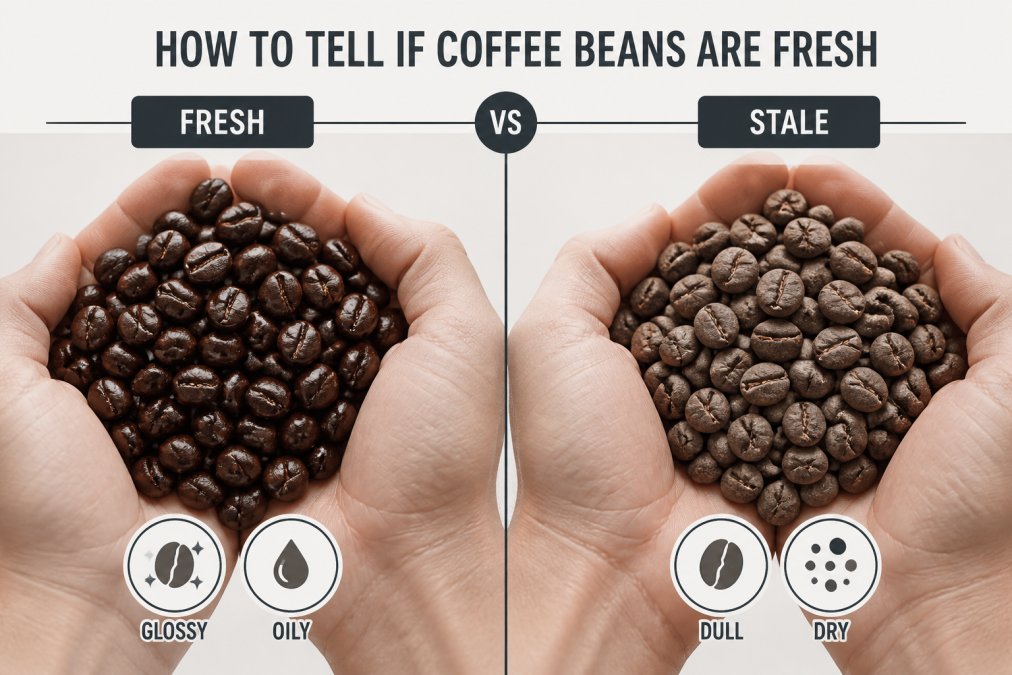
Beyond appearance, you can perform a simple freshness test at home. Place a small handful of beans in a clear glass and cover it with plastic wrap or a lid. Wait 30 seconds, then quickly remove the cover and smell the aroma. Fresh beans release a strong, complex aroma, you should smell caramel, chocolate, fruit notes, or other distinctive scents depending on the roast profile. Stale beans produce a muted, flat aroma with little character.
Another indicator is the bloom when you first pour hot water over the grounds. Fresh coffee releases a visible layer of foam and bubbles as carbon dioxide escapes during the first few seconds of brewing. This phenomenon, called the bloom, is caused by the degassing process. Stale coffee produces little to no bloom because most of the carbon dioxide has already escaped during storage.
The most reliable approach is to check the Roasted On date. If the date is more than 30 days in the past, the coffee is past its peak flavor window. If it's more than 60 days old, you're almost certainly dealing with stale coffee. This single piece of information is more valuable than any visual inspection.
How to Store Coffee Beans for Maximum Freshness
Once you've purchased fresh coffee beans, proper storage becomes critical. How you store coffee beans for maximum freshness determines whether those beans maintain their flavor or continue deteriorating in your kitchen.
The primary enemies of coffee freshness are oxygen, light, heat, and moisture. To maximize shelf life and flavor retention, store beans in an airtight container away from direct sunlight. A dark, opaque container is ideal, glass jars with rubber seals work well, as do dedicated coffee canisters designed with one-way valves that allow carbon dioxide to escape while preventing oxygen from entering.
Temperature consistency matters significantly. Store your coffee at room temperature (around 65-70°F) in a location away from heat sources like ovens or direct sunlight. Avoid refrigerators or freezers. While cold slows oxidation, the temperature fluctuations that occur every time you open the fridge cause condensation, which introduces moisture into the beans. Moisture accelerates flavor degradation and can promote mold growth.
Grind size also affects how quickly coffee stales. Whole beans have less surface area exposed to oxygen than ground coffee. If you grind your beans, the increased surface area accelerates oxidation dramatically. Whole beans maintain freshness for 2-4 weeks with proper storage. Ground coffee begins noticeably degrading within 1-2 weeks. For maximum flavor, grind beans immediately before brewing.
Portion control is practical but often overlooked. If you purchase a large bag of coffee beans, consider dividing them into smaller containers. Keep one container for daily use and store the rest in airtight containers in a cool, dark place. This minimizes how often you open your main container, reducing oxygen exposure for the bulk of your supply.
Fresh-Roasted vs. Mass-Produced: The Flavor Difference
The difference between fresh-roasted and mass-produced coffee extends far beyond subjective preference. The flavor profile gap reflects real chemical differences in the beans' composition.
Mass-produced coffee sold in grocery stores is typically roasted in large batches weeks or months before reaching retail shelves. During this extended storage period, the solubility of the coffee compounds changes. Fresh coffee has optimal solubility, the compounds dissolve evenly and completely when you brew, creating a balanced extraction. As coffee ages, certain compounds become less soluble while others become over-extracted, leading to imbalanced flavors that taste flat or bitter.
Fresh-roasted coffee, by contrast, is roasted in smaller batches and shipped quickly. The beans reach you while the volatile aromatic compounds are still at peak concentration. When you brew fresh-roasted coffee, you're extracting from beans that still possess their full complement of delicate flavor notes. The acidity is brighter, the sweetness is more pronounced, and the overall sensory experience is noticeably richer.
The cupping process, a standardized tasting method used by coffee professionals, makes these differences measurable. Cuppers evaluate coffee on multiple dimensions: aroma, flavor, aftertaste, acidity, body, and balance. Fresh-roasted coffee consistently scores higher across these categories compared to coffee that's been in storage for months. The difference isn't marginal; it's substantial enough that trained tasters can reliably distinguish fresh from stale samples.
From a practical standpoint, fresh-roasted coffee also requires different brewing parameters. Because the beans are still releasing carbon dioxide, the bloom phase during brewing is more vigorous. The extraction happens more efficiently. Many people find they can use slightly lower water temperatures or shorter brew times with fresh coffee and still achieve excellent results, a flexibility that doesn't exist with stale beans.
Why Grocery Store Storage Conditions Accelerate Staleness
Grocery store environments are fundamentally hostile to coffee freshness. The combination of light exposure, temperature fluctuations, and humidity creates conditions that rapidly degrade coffee quality.
Fluorescent lighting in retail stores emits wavelengths that accelerate oxidation. Coffee bags displayed under these lights experience accelerated degradation compared to coffee stored in darkness. Some grocery stores compound this problem by displaying coffee in clear or semi-transparent bags that offer minimal light protection. Even opaque bags provide only partial protection when exposed to hours of bright lighting daily.
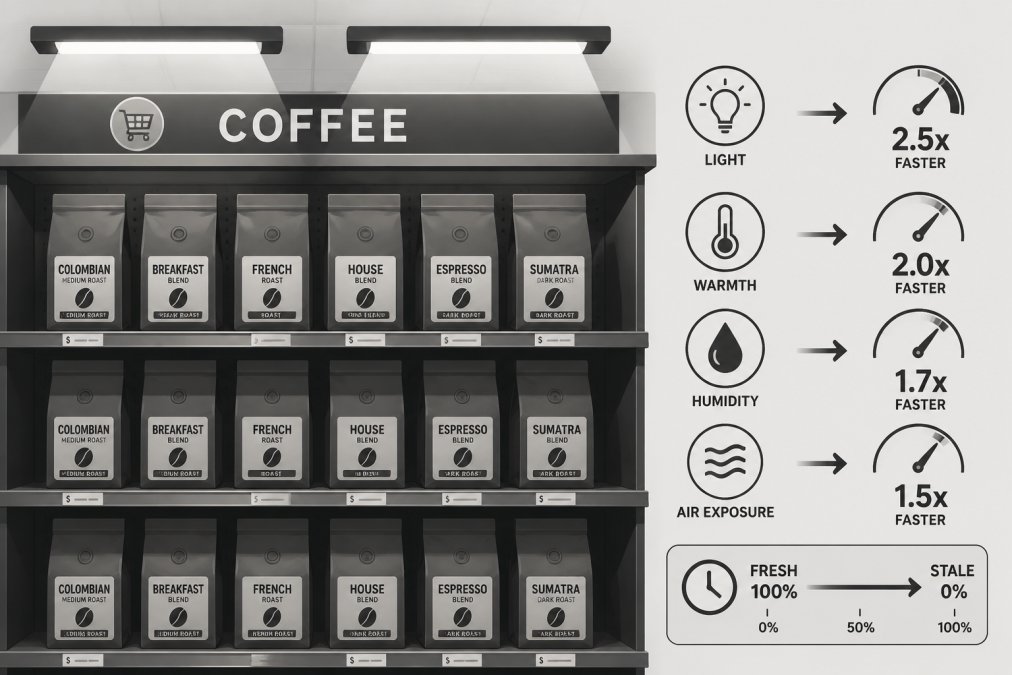
Temperature stability is another critical issue. Grocery store shelves experience significant temperature swings throughout the day and across seasons. During the day, store heating systems and customer traffic raise temperatures. At night, temperatures drop. These fluctuations cause the beans inside sealed bags to expand and contract repeatedly. Over weeks and months, this mechanical stress creates micro-fractures in the beans, allowing oxygen to penetrate deeper into the bean structure.
Humidity in retail environments varies considerably. In some regions, grocery stores maintain dry conditions; in others, humidity levels fluctuate seasonally. High humidity accelerates the degradation of coffee compounds and can introduce moisture into bags if seals are compromised. Low humidity can cause beans to become brittle, making them more susceptible to cracking during grinding.
The duration of storage on grocery shelves is the most significant factor. A bag of coffee might sit on a shelf for 2-3 months before being purchased. During this entire period, it's exposed to the combined effects of light, temperature fluctuation, and oxidation. By the time you bring it home, the coffee has already undergone substantial chemical degradation. The grocery store environment doesn't just store coffee, it actively accelerates the staling process.
This is why grocery store coffee tastes stale even when it's technically within its "Best By" window. The storage conditions themselves are contributing factors that go beyond the simple passage of time.
Conclusion
The staleness you taste in grocery store coffee is the result of multiple factors working in concert: oxidation from prolonged oxygen exposure, volatile aromatic compounds that have dissipated over weeks of storage, and storage conditions that actively accelerate degradation. The misleading "Best By" dates on packaging obscure how old the coffee actually is, while the absence of visible "Roasted On" dates signals that freshness isn't a priority for mass-produced suppliers.
The solution is straightforward: prioritize the Roasted On date, store beans properly in your home, and consider sourcing from roasters who prioritize freshness. Timeless Voices Coffee roasts beans to order and delivers them quickly, ensuring you receive coffee at its flavor peak. With fresh-roasted beans stored in an airtight container away from light and heat, you'll experience a dramatic difference in aroma, acidity, sweetness, and overall flavor complexity compared to grocery store alternatives. The investment in fresher coffee translates directly into a noticeably better cup.
Frequently Asked Questions
How can you tell if coffee beans are actually fresh?
Fresh beans have a rich, vibrant brown color and visible oils on the surface, especially within 2-4 weeks of the roast date. Stale beans appear dull and dry. When you open a bag of fresh coffee, you'll notice a strong, complex aroma. Perform a bloom test: pour hot water over beans and watch for visible CO2 bubbles rising to the surface. Fresh beans release abundant gas; stale beans produce minimal bubbles. Check the roast date on the bag, it should be recent, not a vague "best by" date months away.
What's the difference between a roast date and a best by date?
The roast date tells you exactly when the beans were roasted and is the most reliable freshness indicator. A best by date is a manufacturer estimate of when quality may decline, often set months ahead. A coffee roasted on January 15 with a best by date of March 15 may taste stale by late February. Prioritize bags with visible roast dates printed clearly. Roast dates reveal how long beans have sat in storage, while best by dates can mask the true age of coffee that's been sitting in warehouses or on shelves for weeks.
Why does grocery store coffee taste different from fresh-roasted options?
Grocery store coffee undergoes oxidation and degassing long before you brew it. Roasted beans release volatile aromatic compounds and carbon dioxide for up to two weeks after roasting. Mass-produced coffee is roasted weeks or months before reaching shelves, losing these compounds that create flavor complexity and sweetness. Additionally, grocery store bags often lack proper one-way valves, allowing oxygen to enter and accelerate rancidity. Fresh-roasted beans still contain active degassing and aromatic compounds when you brew them, delivering the full sensory experience the roaster intended.
How should I store coffee beans to keep them fresh at home?
Store beans in an airtight container away from light, heat, and moisture. A dark cupboard or pantry works better than a refrigerator, which introduces moisture that degrades flavor. Keep beans in their original bag if it has a one-way valve, or transfer them to an opaque, sealed container. Buy only what you'll use within 2-4 weeks of the roast date. Avoid freezing unless you plan to store beans for several months; freezing and thawing creates condensation that damages bean integrity and extraction quality. Whole beans stay fresher longer than pre-ground coffee, which exposes more surface area to oxygen.
This article was written using GrandRanker