

How to Identify Ethically Sourced Coffee
Table of Contents
- What Ethically Sourced Coffee Actually Means
- Understanding Coffee Certification Labels Explained
- Fair Trade vs. Direct Trade Coffee
- What Is Direct Trade Coffee
- How to Read Coffee Labels and Detect Greenwashing
- Verifying Supply Chain Transparency and Traceability
- The Economic Reality: What Ethical Sourcing Costs Farmers
- Your Role as a Consumer: Making Informed Purchases
Last Updated: August 15, 2026
What Ethically Sourced Coffee Actually Means
Ethically sourced coffee refers to beans grown and harvested under conditions that prioritize fair treatment of farmers, environmental stewardship, and transparent supply chains. When you choose ethically sourced coffee, you're supporting agricultural practices that respect both people and land. Farmers receive fair compensation, workers have safe conditions, and the environment isn't depleted through unsustainable farming methods.
In conventional coffee production, middlemen and exporters capture most of the profit. A farmer might receive 30 cents per pound while the final retail price reaches $12 to $15. Ethically sourced models compress that gap, ensuring more money reaches the people actually growing the crop.
At Timeless Voices Coffee, we prioritize this transparency by sourcing from trusted farms worldwide and roasting to order. This direct relationship with growers ensures freshness while supporting sustainable practices from seed to cup.
Understanding Coffee Certification Labels Explained
Coffee certifications exist to verify ethical claims and prevent greenwashing. Third-party organizations audit farms and supply chains to confirm they meet specific standards.
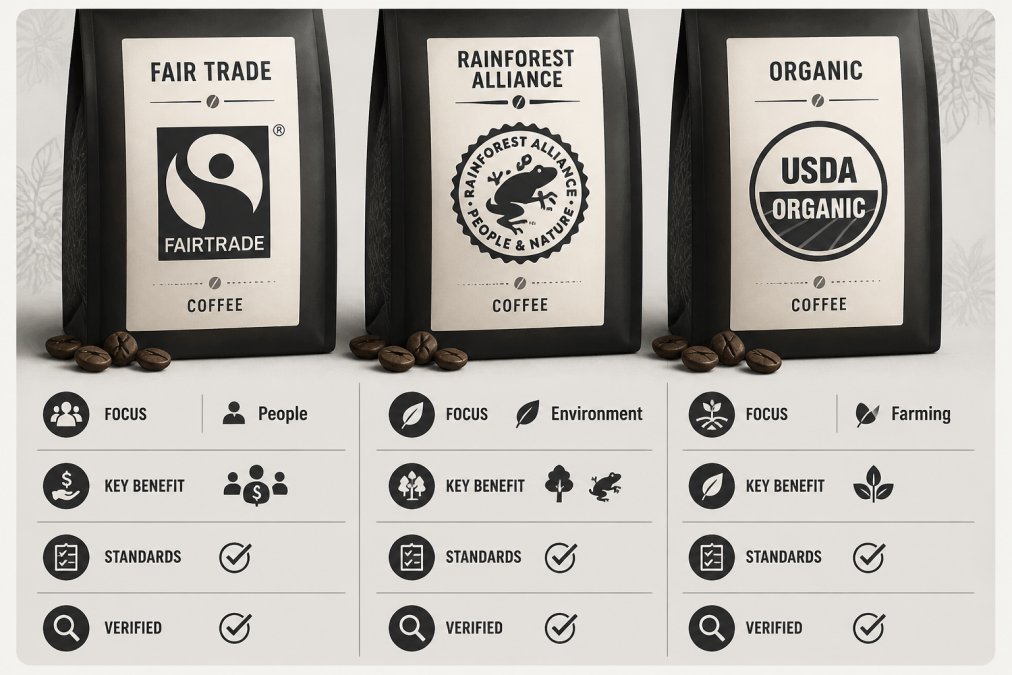
Fair Trade Certification represents one of the most recognized standards in coffee. Fair Trade organizations guarantee minimum prices for farmers, ensuring they earn enough to cover production costs plus a livable income. The certification also requires democratic cooperatives, safe working conditions, and prohibits child labor. Fair Trade-certified coffee typically costs more at retail, but that premium directly supports farmer welfare. Individual smallholder farmers join cooperative organizations that collectively negotiate with exporters and roasters, preventing exploitation. Fair Trade auditors verify compliance annually.
Rainforest Alliance and Other Third-Party Certifications take broader approaches to sustainability. Rainforest Alliance focuses on environmental protection, including shade-grown practices that preserve biodiversity, water conservation measures, and pesticide restrictions. Other recognized certifications include Bird Friendly (which guarantees shade-grown coffee that supports migratory bird populations), Organic (which prohibits synthetic pesticides and fertilizers), and UTZ (which combines environmental and social standards). Each certification has different priorities, so understanding what each label represents helps you make choices aligned with your values.
Fair Trade vs. Direct Trade Coffee
Fair Trade and Direct Trade represent fundamentally different approaches to connecting farmers with buyers.
Fair Trade certification operates through established organizations with formal standards. Fair Trade International, Fair Trade USA, and similar bodies set minimum prices, typically between $1.40 and $1.90 per pound depending on coffee type and market conditions. Every Fair Trade coffee meets the same baseline requirements, with annual audits and revoked certification for violations. This consistency means you know what you're getting, though the bureaucratic structure can slow payments and reduce flexibility for small farmers.
Direct Trade coffee skips certification organizations entirely. Roasters establish direct relationships with specific farms or farmer groups and negotiate prices, terms, and practices directly. Direct Trade prices often exceed Fair Trade minimums, sometimes reaching $3 to $5 per pound or higher, because the roaster captures the margin that would otherwise go to middlemen. This relationship-based model can deliver higher farmer income and more responsive support. The drawback is the lack of independent verification, there's no third-party auditor confirming claims.
Many coffee professionals view Direct Trade as superior when executed well, because it eliminates middlemen and allows higher farmer payments. However, Fair Trade certification provides third-party assurance that Direct Trade cannot match. The best choice depends on whether you prioritize maximum farmer income (Direct Trade with a reputable roaster) or verified standards (Fair Trade).
Timeless Voices Coffee sources from trusted farms worldwide using direct relationships that prioritize fair compensation and sustainable practices.
What Is Direct Trade Coffee
Direct Trade coffee is coffee purchased directly from farms or farmer cooperatives by roasters, eliminating intermediaries like exporters and importers. The roaster negotiates prices, terms, and practices directly with the coffee producer.
Direct Trade emerged as a response to Fair Trade's limitations. The roaster takes on roles traditionally handled by exporters, financing harvests, arranging shipping, handling quality control, and managing logistics. In exchange, the roaster captures the margin that exporters would take, allowing higher payments to farmers. Direct Trade farmers often receive additional support beyond price premiums, such as infrastructure improvements, agricultural training, or processing equipment.
The challenge with Direct Trade is verification. Without third-party audits, you must trust the roaster's claims. Established specialty coffee roasters with transparent sourcing information typically practice authentic Direct Trade. Direct Trade works particularly well for single-origin coffees, where a roaster can ensure consistent quality and build genuine partnerships.
How to Read Coffee Labels and Detect Greenwashing
Coffee labels contain valuable information if you know what to look for. Learning to read labels helps you distinguish genuine ethical sourcing from marketing exaggeration.
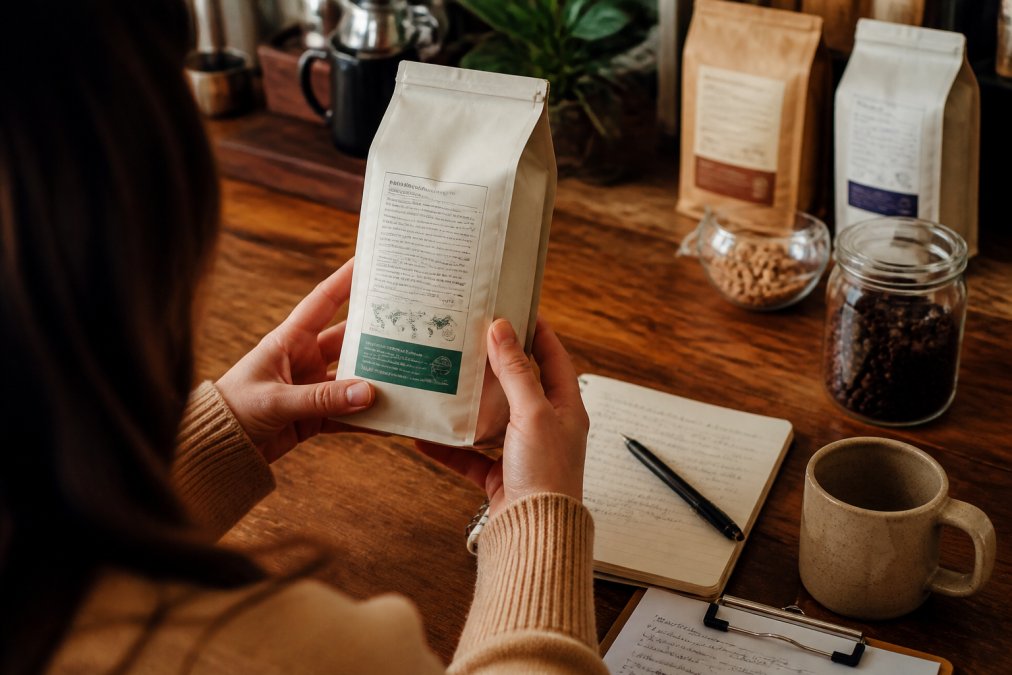
Start with the front label. Look for specific certifications: Fair Trade, Rainforest Alliance, Bird Friendly, Organic, or Direct Trade. The absence of certifications doesn't mean the coffee is unethical, many excellent small roasters practice ethical sourcing through Direct Trade relationships.
The back label contains crucial details. Look for the farm name, region, and country. Specific farm information indicates traceability. "Ethiopian coffee" is vague. "Yirgacheffe region, Gedeo Zone, Ethiopia, grown by Muleta Cooperative" is traceable. Check for tasting notes and processing methods, which demonstrate roaster knowledge. Look for the roast date, ethically sourced coffee is usually roasted to order or in small batches. A roast date within the past two weeks indicates fresh coffee.
Red Flags on Packaging
"Sustainably sourced" without specific certifications or farm details is vague marketing language. "Ethically sourced" used alone, without supporting details, is another red flag. "Rainforest safe" or similar invented labels don't correspond to recognized certifications. Vague origin claims like "sourced from Africa" hide supply chain details. "Fair trade-like" or "fair trade inspired" indicates the coffee doesn't meet Fair Trade standards.
What Genuine Claims Look Like
Authentic ethical sourcing claims include specific details. "This coffee comes from the Addis Ababa Cooperative in the Sidamo region of Ethiopia. We pay farmers $2.15 per pound, 45% above Fair Trade minimums. The cooperative uses shade-grown methods and reinvests premiums in member education." Genuine Direct Trade claims name the farm, the farmer, and the roaster's relationship. Certification badges from recognized organizations indicate third-party verification. Price transparency signals genuine sourcing.
Verifying Supply Chain Transparency and Traceability
Supply chain transparency means you can trace the coffee from farm to cup. Start by visiting the roaster's website and looking for pages dedicated to sourcing practices or farm partnerships. Search for the farm or cooperative name in Fair Trade or certification databases. Contact the roaster directly with questions about sourcing, legitimate ethical roasters welcome inquiries and provide detailed answers.
Look for third-party verification beyond certifications. Some roasters publish annual impact reports showing farmer payments, environmental metrics, or community development investments. Check if the roaster partners with organizations focused on coffee farmer welfare, such as the Specialty Coffee Association. Many ethical roasters share photos from farm visits or stories about farmers on social media, demonstrating genuine relationships.
The Economic Reality: What Ethical Sourcing Costs Farmers
A typical cup of coffee retails for $3 to $5 in specialty shops. In conventional commodity coffee, the farmer receives roughly 5-10% of that price. Fair Trade and Direct Trade models redistribute this money toward farmers. Fair Trade guarantees minimum prices that typically represent 40-50% of specialty retail prices. Direct Trade often delivers even more.
Smallholder farmers, who produce the majority of the world's coffee, face particular economic pressure. Most own fewer than five acres. In the commodity model, many farmers earn less than production costs, operating at a loss. Fair Trade and Direct Trade minimum prices ensure farmers cover costs and earn livable income. Ethical sourcing practices like shade-growing, water conservation, and organic methods preserve farm productivity long-term.
Your Role as a Consumer: Making Informed Purchases
Your purchasing decisions directly influence coffee supply chains. Start by prioritizing transparency. Buy from roasters that provide detailed sourcing information and answer questions thoroughly. Seek out certifications when they matter to you. Support specialty roasters over mass-market alternatives, which rarely publish sourcing details or farmer payment information.
Consider buying directly from roasters rather than through retailers when possible. Direct purchase eliminates middlemen and often means more money reaches farmers. Many roasters, including Timeless Voices Coffee, offer direct delivery with fresh-roasted beans. Develop relationships with roasters you trust, regular purchasing means your money consistently supports their sourcing practices.
Accept that ethically sourced coffee costs more. The premium reflects genuine farmer payments, environmental practices, and supply chain transparency. Share what you learn with others. When friends ask why you pay more for coffee, explain the supply chain economics and recommend roasters with transparent sourcing.
Identifying ethically sourced coffee requires attention to certifications, supply chain transparency, and specific sourcing details. The roasters that invest in relationships with farmers, publish detailed information about their sourcing practices, and provide third-party verification deserve your trust. At Timeless Voices Coffee, we source carefully from trusted farms worldwide, roast to order for maximum freshness, and maintain transparent relationships with our growers. When you choose ethically sourced coffee, you're supporting sustainable agriculture, fair farmer compensation, and the kind of quality that defines a truly exceptional cup.
Frequently Asked Questions
How can I tell if my coffee is ethically sourced?
Check for third-party certifications like Fair Trade, Rainforest Alliance, or Bird Friendly on the label. Look for the roaster's website information about farm origins and direct relationships with growers. Ethically sourced coffee typically displays traceability details, farm names, and regions. If the label uses vague language like 'ethically sourced' without certification backing, it may be greenwashing. Direct Trade roasters often list specific farm names and farmer names, which you can verify directly with the company.
What is the difference between Fair Trade and Direct Trade coffee?
Fair Trade uses a certification system with price floors and third-party auditing to ensure farmers receive minimum wages and fair conditions. Direct Trade eliminates middlemen by having roasters buy directly from farmers, typically at higher prices negotiated face-to-face. Fair Trade works through established cooperatives and supply chains, while Direct Trade emphasizes personal relationships and transparency. Both aim to improve farmer welfare, but Direct Trade offers more control over pricing while Fair Trade provides standardized protections across certified producers.
What are the most reliable coffee certification labels?
Fair Trade Certified, Rainforest Alliance, and Bird Friendly (Smithsonian) are among the most rigorous certifications. Fair Trade focuses on fair wages and labor conditions. Rainforest Alliance emphasizes environmental sustainability and worker welfare. Bird Friendly certification requires shade-grown practices that protect migratory bird habitats. Organic certification ensures pesticide-free farming. Look for labels that include third-party auditing information and specific standards on their websites. Avoid generic terms like 'naturally sourced' or 'responsibly grown' without backing certification.
How does ethical sourcing impact the price of coffee?
Ethically sourced coffee costs more because farmers receive living wages, cooperatives invest in sustainable practices, and certification bodies conduct audits. Fair Trade premiums typically add 10-20% to wholesale costs. Direct Trade relationships often pay farmers 2-3 times commodity coffee prices. These costs reflect the true value of sustainable agriculture, water conservation, and fair labor conditions. While prices are higher at checkout, you're funding environmental protection, biodiversity preservation, and economic equity for smallholder farmers and their communities.
This article was written using GrandRanker