

Is Fresh Roasted Coffee Worth It: A Data-Driven Analysis
Table of Contents
- The Science of Coffee Freshness and Why It Matters
- How Long Does Coffee Stay Fresh After Roasting
- The Economics: Fresh Roasted vs. Store-Bought Coffee
- How to Store Coffee Beans for Freshness and Longevity
- Signs of Stale Coffee Beans and Quality Decline
- Is Fresh Roasted Coffee Worth It for Your Daily Routine
- Environmental and Ethical Considerations
- Conclusion
Last Updated: August 20, 2026
The Science of Coffee Freshness and Why It Matters
Coffee freshness is fundamentally a chemistry problem. When roasted beans are exposed to air, they begin losing volatile compounds and aromatics that define their flavor profile. This process, called oxidation, accelerates dramatically in the days immediately after roasting. The carbon dioxide that builds up inside the bean during roasting, a process driven by the Maillard reaction and caramelization during heat exposure, gradually escapes, taking flavor-active compounds with it.
Understanding why fresh roasted coffee matters requires looking at what happens at the molecular level. The oils that migrate to the bean's surface after roasting are responsible for much of the coffee's body and sensory complexity. Once exposed to oxygen, these oils oxidize and become rancid, fundamentally changing the cup profile. This isn't subtle degradation. A coffee that tastes bright and complex on day three tastes flat and bitter on day thirty.
The real question isn't whether freshness matters, it objectively does. The question is whether the difference justifies the cost and effort for your specific situation. That's where the analysis gets interesting.
How Long Does Coffee Stay Fresh After Roasting
Coffee begins losing flavor immediately after roasting, but the timeline varies based on storage conditions and bean density. Whole beans stored in an airtight container at room temperature remain at peak flavor for roughly two weeks. After that, degradation accelerates noticeably. By week four, most people can detect a meaningful loss of aromatics and brightness. By week eight, the coffee tastes noticeably stale to anyone paying attention.
The shelf life question gets more complex when you account for variables. A light roast, with its higher acidity and more delicate flavor notes, degrades faster than a dark roast. The reason is straightforward: lighter roasts have less caramelization to buffer oxidation. A single-origin Ethiopian natural-process bean will taste noticeably different at day seven versus day twenty-one. A dark-roasted blend might hold up reasonably well for a month if stored properly.
Storage method dramatically affects this timeline. Vacuum-sealed bags extend freshness significantly, some argue by two to three weeks. Freezing whole beans in an airtight container can preserve flavor for several months, though the freeze-thaw cycle introduces moisture concerns if not handled carefully. Grinding beans before storage accelerates oxidation exponentially; ground coffee reaches the "stale" threshold in days, not weeks.
The practical implication: if you're buying coffee from a grocery store shelf with no roast date visible, you're almost certainly drinking coffee that's already past its peak. There's no way to know if those beans were roasted three weeks ago or three months ago. With fresh roasted coffee delivered to your door from a roaster like Timeless Voices Coffee, you know exactly when the beans left the roaster.
The Economics: Fresh Roasted Coffee vs. Store-Bought Coffee
The cost comparison between fresh roasted and grocery store coffee depends entirely on what you're comparing. Budget grocery store coffee costs roughly one-third the price of specialty fresh-roasted options. Mid-tier grocery brands fall somewhere in between. The question isn't just about price per pound, it's about price per cup and the actual experience you're getting.
A typical fresh-roasted single-origin bean might cost between standard grocery brands and premium supermarket options. When you calculate the actual cost per cup, accounting for brew method, extraction yield, and the fact that fresher beans often require less coffee to achieve the same flavor intensity, the gap narrows considerably. A cup from fresh roasted coffee might cost 30-50% more than a cup from budget grocery beans, but you're also getting dramatically better flavor, aroma, and the kind of sensory experience that makes your morning ritual feel intentional rather than obligatory.
The environmental calculation adds another layer. Fresh roasted coffee roasted to order means less inventory sitting in warehouses and fewer beans that spoil before reaching consumers. Bulk commodity coffee production creates waste at every stage. If you care about environmental impact, this matters.
The convenience factor cuts both ways. Buying coffee at the grocery store requires no planning. Fresh roasted coffee requires a subscription or regular ordering. For someone working from home who values consistency, subscription delivery eliminates the possibility of running out. For someone with an unpredictable schedule, it creates the opposite problem, too much coffee accumulating.
The honest economic answer: fresh roasted coffee is worth it if you drink enough coffee regularly to justify the premium and you actually notice the difference. If you're someone who drinks one cup of coffee per day and mostly cares that it's hot and caffeinated, the premium probably isn't justified. If you're someone who drinks 2-3 cups daily and genuinely enjoys coffee, the difference in experience usually justifies the cost.

How to Store Coffee Beans for Freshness and Longevity
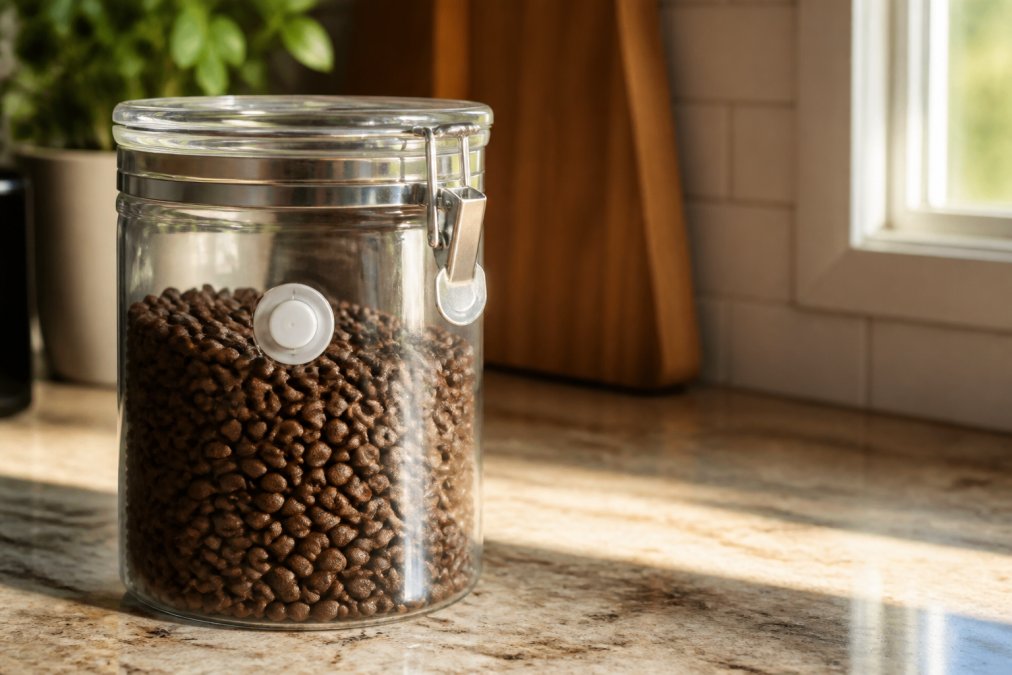
Proper storage is where most people fail at keeping coffee fresh. The enemy is fourfold: oxygen, light, heat, and moisture. Each one accelerates oxidation and degrades flavor. The solution is equally straightforward: airtight containers, away from direct sunlight, at room temperature, with minimal air exposure.
The best storage approach uses an airtight container specifically designed for coffee. These containers have a one-way valve that allows CO2 to escape during the degassing period without letting oxygen back in. This is better than a sealed mason jar because it prevents pressure buildup that can force the seal open. Keep the container in a cool, dark cupboard, not on the counter in sunlight, not above the stove, not in the refrigerator where humidity fluctuates.
For longer-term storage beyond four weeks, freezing whole beans works well if done correctly. The key is using an airtight, freezer-safe container and minimizing freeze-thaw cycles. Remove only the amount you need, then return the rest to the freezer immediately. The temperature stability of a freezer prevents the oxidation that happens at room temperature, though it doesn't stop it entirely.
Never store coffee in the refrigerator. The temperature fluctuations as you open and close the door create condensation inside the container. This moisture accelerates both oxidation and the growth of mold. Grinding coffee before storage is a last resort, it increases surface area exposed to oxygen by orders of magnitude. If you must grind ahead, store ground coffee in the freezer and use it within days.
Signs of Stale Coffee Beans and Quality Decline
Stale coffee announces itself through multiple sensory cues. The first indicator is aroma. Fresh roasted coffee has a bright, complex smell that fills the room when you open the bag. Stale coffee smells flat and muted. If you can't smell the coffee clearly when you open the container, it's already past its peak.
The visual appearance changes too. Fresh beans have an oily sheen on the surface, especially in medium and dark roasts. This oil migration is a natural part of the cooling process after roasting. As beans age, these oils oxidize and the surface becomes dull. The color also shifts, fresh beans have a consistent, vibrant color. Stale beans look washed out and sometimes develop a grayish cast.
Taste is the final arbiter. Stale coffee tastes thin and bitter, lacking the brightness and complexity of fresh beans. The body feels hollow. If you're accustomed to drinking fresh roasted coffee and then switch to older beans, the difference is immediately obvious. For someone who's never had truly fresh coffee, stale beans might taste normal, which is exactly the problem.
The bloom test offers an objective indicator. When you pour hot water over fresh coffee grounds, they release CO2 in a visible bloom that lasts several seconds. Stale grounds produce minimal bloom. This happens because the CO2 has already escaped. No bloom means the beans have been sitting around longer than they should have.
Is Fresh Roasted Coffee Worth It for Your Daily Routine
The answer depends on three variables: how much coffee you drink, how much you notice flavor differences, and what your budget allows.
For someone drinking a single cup daily, the premium for fresh roasted coffee probably doesn't justify itself. You're adding cost and complexity to a routine that works fine with standard grocery coffee. The ritual might improve slightly, but it's not a meaningful change.
For someone drinking 2-3 cups daily who actually tastes their coffee, fresh roasted coffee transforms the experience. The brightness, the aromatics, the complexity, these aren't luxuries. They're the actual point of drinking coffee. Once you've experienced what coffee tastes like at its peak, going back to stale grocery store beans feels like a downgrade.
The subscription model matters here. Timeless Voices Coffee roasts beans to order and delivers them at peak freshness. This means you're never drinking coffee that's been sitting in a warehouse or on a shelf. You're getting the beans at the point where they're optimized for brewing. For someone working from home, this consistency eliminates the "oh no, I'm out of coffee" panic that comes with irregular purchasing.
The environmental angle adds a secondary argument. Fresh roasted coffee roasted to order means less waste throughout the supply chain. Bulk commodity coffee systems produce significant loss at every stage, beans that spoil in transit, inventory that never sells, packaging waste. If you care about your environmental footprint, fresh roasted coffee is a more defensible choice.
The honest take: fresh roasted coffee is worth it if you meet two criteria. First, you drink enough coffee regularly that the premium amortizes across many cups. Second, you actually notice and enjoy the flavor difference. If either is false, save your money.
Environmental and Ethical Considerations
The coffee industry's environmental impact is substantial. Conventional coffee farming requires significant water use, pesticide application, and often involves deforestation. The supply chain from farm to cup involves multiple intermediaries, each adding transportation emissions and packaging waste.
Fresh roasted coffee roasted to order addresses some of these issues directly. By roasting in small batches based on actual demand, roasters eliminate the waste that comes from overproduction. Beans don't sit in warehouses for months. Inventory doesn't spoil. The supply chain is shorter and more direct.
The ethical sourcing question is where fresh roasted coffee has genuine advantages. Specialty roasters typically source directly from farms or through relationships with importers who know the producers. This creates traceability that commodity coffee systems can't match. You can know the specific farm where your beans grew, the elevation, the processing method, the farmer's name in some cases.
Timeless Voices Coffee emphasizes carefully sourced beans from trusted farms worldwide. This sourcing approach means the farmers who grew your coffee receive better compensation than they would through commodity channels. It's not perfect, the coffee industry has deep structural inequities, but it's materially better than the alternative.
The packaging question matters too. Fresh roasted coffee typically ships in minimal packaging designed for freshness rather than shelf appeal. Grocery store coffee often comes in elaborate packaging designed to sit on shelves for months. The environmental footprint of fresh roasted coffee is lower at every stage of the supply chain.
Conclusion
Fresh roasted coffee is worth it if you're someone who drinks coffee regularly and actually cares about how it tastes. The flavor difference is real and measurable. The freshness advantage is objective. The convenience of having fresh-roasted beans delivered to your door eliminates the friction of finding quality coffee.
For most people working from home who value their morning ritual, Timeless Voices Coffee solves the core problem: delivering carefully sourced, fresh roasted beans at peak flavor. The wide variety of blends, single-origin options, and flavored selections means you get both consistency and the ability to explore. Fast, reliable delivery ensures you never run out.
Start with understanding your own coffee consumption and taste preferences. If you're already noticing flavor differences between coffee at home and at specialty cafes, fresh roasted coffee is almost certainly worth trying.
Frequently Asked Questions
Is fresh roasted coffee actually better than grocery store coffee?
Fresh roasted coffee delivers noticeably superior flavor, aroma, and body compared to grocery store options. Beans begin losing volatile compounds and aromatic compounds immediately after roasting due to oxidation and CO2 loss. Fresh roasted coffee, typically roasted within days before delivery, preserves these flavor notes and aromatics that grocery store coffee loses during extended shelf time. The difference is most apparent in the bloom, extraction yield, and sensory analysis of the final cup.
How long does fresh roasted coffee stay fresh?
Fresh roasted coffee peaks in flavor within 3 to 14 days after roasting, depending on roast profile and storage conditions. During the first few days, CO2 degassing continues, which can affect brewing. After two weeks, oxidation accelerates and flavor notes diminish noticeably. Proper storage in airtight, vacuum-sealed containers extends freshness, but the quality window for optimal taste is relatively brief compared to commercial coffee that's been sitting for weeks or months.
What are the signs my coffee beans have gone stale?
Stale coffee beans show reduced aromatics, a flat or muted flavor profile, and less vibrant acidity and body. Visually, oil migration may appear uneven, or beans may look dull rather than glossy (depending on roast level). The bloom during brewing will be noticeably smaller, indicating lower CO2 content. If beans smell musty, moldy, or lack their characteristic roasted aroma, they've degraded and should be replaced.
Is the premium price of fresh roasted coffee justified by taste alone?
The premium reflects both superior taste and the cost of roasting to order from quality green coffee beans sourced from trusted farms. Fresh roasted coffee delivers measurably better extraction yield, richer aromatics, and more complex flavor development due to the maillard reaction and caramelization happening closer to consumption. For daily drinkers and remote professionals seeking a premium experience, the sensory difference justifies the cost. However, if convenience and cost are your only priorities, grocery store coffee will function adequately.
This article was written using GrandRanker